5 Confidence-Building Baseball Drills for Game Day
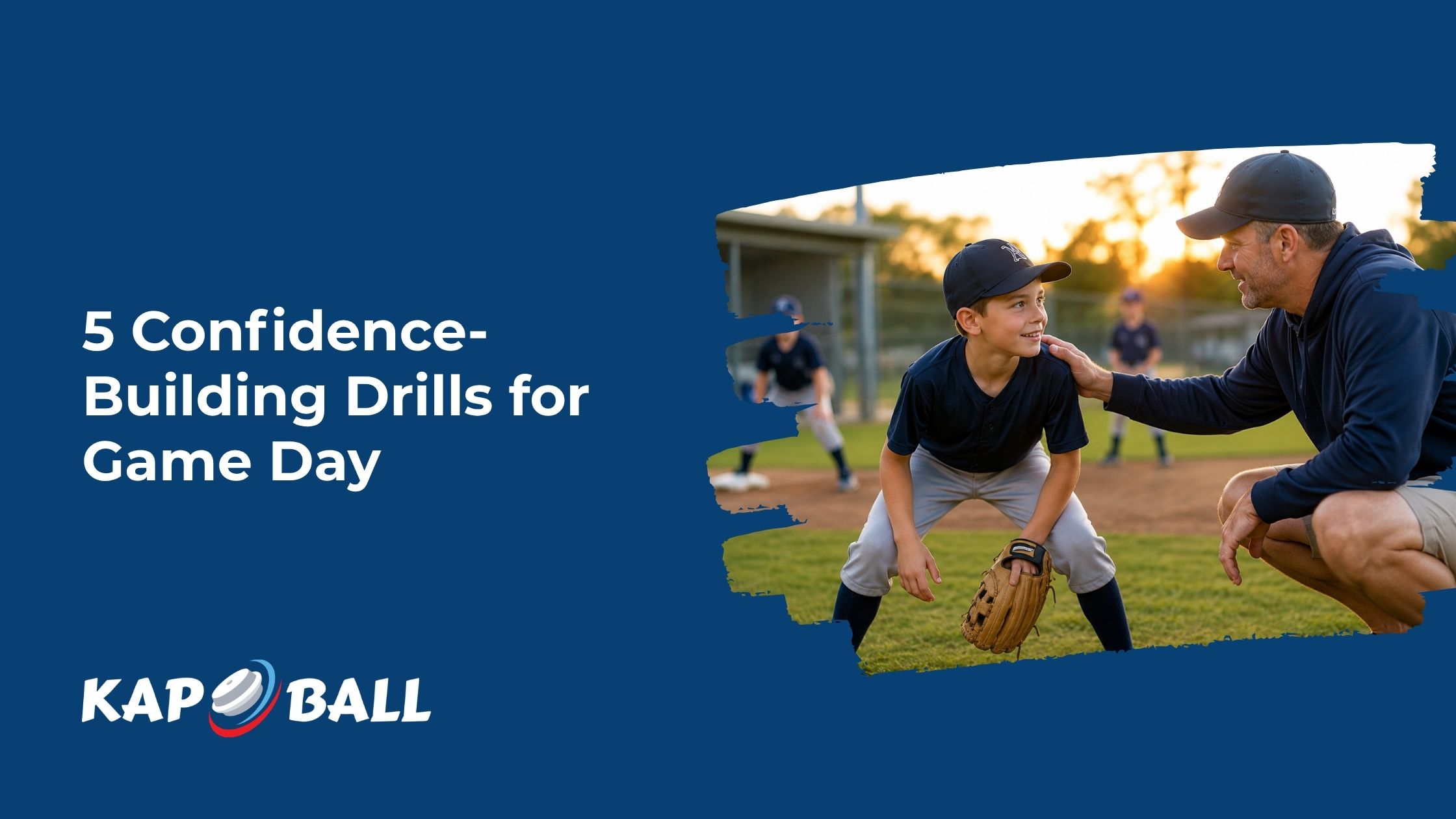
There’s a big difference between practicing baseball skills and feeling ready to use those skills in a game.
A lot of young players look great during practice. Then game day comes around, and suddenly they freeze up, rush throws, swing at bad pitches, or lose focus after one mistake.
That’s normal.
Confidence in baseball is not something kids magically wake up with. It’s something they build through repetition, preparation, and small wins that teach them, “I can handle this.”
As coaches and parents, one of the best things we can do is create practice moments that help kids feel calm, prepared, and capable before the pressure of game day shows up.
Here are five simple drills I love using to help young players build confidence that actually carries over into games.
1. The Ready Position Freeze Drill
One of the fastest ways to help kids feel more confident is to help them feel prepared before the ball is even hit.
A lot of nervous players stand flat-footed in the field. Their minds wander. Then when the ball comes their way, they panic because they were never truly ready.
This drill teaches anticipation and athletic posture.
How to do it:
Have your player stand in their defensive position.
Pretend to be the pitcher.
As you say “pitch,” the player gets into a ready position:
Feet active
Glove out front
Knees bent
Eyes focused
Freeze them there for 2–3 seconds.
Repeat several times before adding a ground ball or pop fly.
Why it builds confidence:
When kids consistently start in a strong athletic position, the game slows down for them. They feel more prepared, which reduces fear and hesitation.
Confidence often starts with simply feeling ready.
2. The Short-Hop Ground Ball Drill
Bad hops scare young players. Especially beginners.
Many kids lose confidence because they’ve had one or two tough ground balls hit off their glove or body. After that, they start backing up or stabbing at the ball.
This drill helps players learn they can handle imperfect hops.
How to do it:
Stand about 10–15 feet away.
Toss or lightly hit short hops directly to the player.
Start easy and controlled.
Teach them to:
Stay low
Keep the glove out front
Watch the ball all the way in
Praise effort and technique, not perfection.
Why it builds confidence:
Players begin realizing they don’t have to fear the ball. They learn they can recover, adjust, and stay in front of it.
That mindset matters during games.
3. The “Next Play” Throwing Drill
One mistake can completely derail a young player emotionally.
A missed catch turns into a rushed throw. Then another mistake follows. Suddenly confidence disappears for the rest of the inning.
This drill teaches emotional recovery.
How to do it:
Have players field a ground ball and make a throw.
Occasionally create a small challenge:
Slight bad hop
Quick transition
Slightly rushed timing
No matter what happens, immediately roll the next ball.
The goal is simple:
Move on fast.
You can even teach a reset phrase like:
“Next play.”
“Flush it.”
“I’m ready.”
Why it builds confidence:
Confident players are not players who never make mistakes.
They are players who recover quickly from mistakes.
That is a huge difference.
4. Pressure Countdown Hitting
Game swings feel different because emotions change timing.
Kids rush. They overthink. They swing harder instead of swinging smoothly.
This drill adds controlled pressure in a fun way.
How to do it:
Toss or pitch batting practice.
Give the player a challenge:
“You need 3 solid hits out of 5.”
“Last swing wins.”
“Runner on third, hit the ball to the outfield.”
Keep the energy positive and encouraging.
The key is not making kids afraid to fail. The goal is helping them experience pressure in a manageable environment.
Why it builds confidence:
Players start learning:
“I’ve handled pressure before.”
That familiarity helps calm nerves during real games.
5. The Pre-Game Success Routine
This may be the most important one of all.
Confident players often have routines.
Not because routines are magical, but because routines create familiarity. Familiarity creates calm.
Young players especially benefit from simple pre-game habits.
Try a short routine like:
10 clean catches
5 short ground balls
5 strong throws
3 relaxed practice swings
One deep breath before taking the field
Keep it simple. Keep it consistent.
Why it builds confidence:
When kids know exactly how they prepare, they stop relying on emotions to feel ready.
Preparation becomes the source of confidence.
And that’s powerful.
A Quick Reminder for Parents
Confidence is not built by telling kids, “Don’t be nervous.”
Confidence is built when players experience success, recovery, preparation, and repetition over time.
Some kids show confidence loudly. Others show it quietly.
Both are okay.
Your role is not to eliminate mistakes. It’s to help your player feel safe learning through them.
That’s where real growth happens.
Final Thoughts
Game confidence does not appear overnight.
It grows one repetition at a time. One successful catch. One recovered mistake. One calm breath before the next pitch.
The good news is that confidence can absolutely be practiced.
And when young players start believing they can handle hard moments, baseball becomes a lot more fun for everyone involved.
Next Step
This week, pick just one of these drills and try it for 10 minutes before practice or in the backyard. Don’t worry about making everything perfect. Focus on helping your player feel prepared, relaxed, and encouraged. Small moments of success add up fast in youth baseball. If you try one of these drills, we’d love to hear how it goes. Keep showing up, keep building confidence, and keep making the game fun.

