Creating a Positive Team Culture for Kids in Baseball
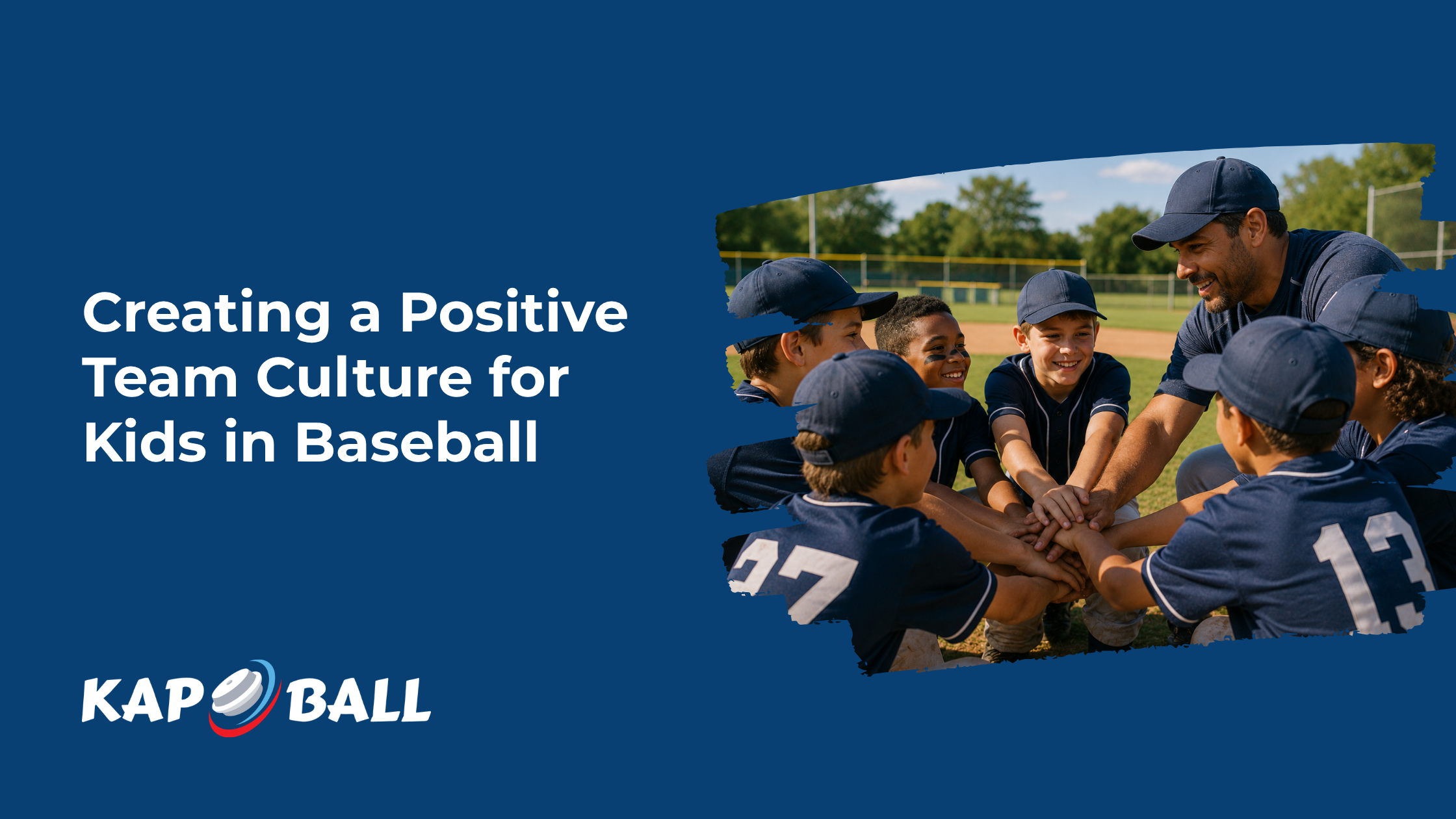
One season, I coached a team that wasn't the most talented group I'd ever worked with.
We didn't have the hardest throwers.
We didn't hit the most home runs.
We certainly didn't win every game.
But every practice started the same way.
The kids ran onto the field with smiles on their faces.
They celebrated each other's successes.
When someone made an error, a teammate was already there saying, "Shake it off. You got the next one."
By the end of the season, something incredible had happened.
The players had improved far more than anyone expected.
Not because they suddenly became bigger, stronger, or faster.
They got better because they trusted each other.
They enjoyed coming to the field.
They weren't afraid to make mistakes.
That's the power of a positive team culture.
It's one of the most important things a coach can build, and one of the greatest gifts parents can help protect.
Team Culture Starts Long Before the First Pitch
When people hear the words "team culture," they often think about winning.
I think about something much simpler.
How do kids feel when they arrive at the field?
Do they feel excited?
Do they feel accepted?
Do they know their teammates are happy to see them?
Those first few minutes tell you a lot about a team.
When players feel like they belong, they're more willing to try new things, work hard, and encourage one another.
That's where real growth begins.
Every Player Matters
One of my favorite moments as a coach isn't watching a home run.
It's watching a player who doesn't get much playing time celebrate a teammate's big hit as if they hit it themselves.
That's when you know the team is becoming something special.
Every player has value.
Some contribute with their glove.
Some bring energy to the dugout.
Some encourage teammates after every inning.
Every role matters.
When kids understand that, they stop worrying so much about themselves and start thinking about the team.
Mistakes Should Bring Encouragement, Not Blame
If you've spent any time around youth baseball, you've probably seen it.
A player makes an error.
The dugout gets quiet.
Heads drop.
Sometimes teammates even point fingers.
That moment can shape the rest of the game.
Now imagine something different.
A teammate jogs over and says, "Don't worry about it. Let's get the next one."
Suddenly, the player relaxes.
Confidence returns.
The team moves forward together.
Mistakes are guaranteed in baseball.
How a team responds to those mistakes is what defines its culture.
Parents Play a Bigger Role Than They Realize
Positive team culture isn't built only by coaches.
Parents help shape it, too.
Kids notice everything.
They hear the conversations after games.
They watch how adults react to mistakes.
They notice whether parents cheer for every player or only their own child.
One of the best things a parent can do is celebrate great plays from anyone wearing their team's jersey.
When adults model respect and encouragement, kids usually follow.
Winning Is More Fun When Everyone Feels Included
Every team wants to win.
There's nothing wrong with that.
But the happiest teams I've coached weren't always the teams with the best record.
They were the teams where kids laughed during warmups.
Cheered from the dugout.
High-fived after strikeouts.
Picked each other up after errors.
Those are the teams kids remember years later.
Those are the teams they can't wait to come back to next season.
Confidence Is Contagious
One confident player can change the energy of an entire dugout.
One encouraging teammate can help another player bounce back after a tough inning.
One positive coach can completely change how kids see themselves.
The same is true for negativity.
That's why we work so hard to create an environment where players feel supported instead of judged.
Confidence spreads.
So does kindness.
Thankfully, both are contagious.
Baseball Is About More Than Baseball
Years from now, most kids won't remember the score of a random Saturday game.
They probably won't remember their batting average either.
But they'll remember how their teammates treated them.
They'll remember whether they felt accepted.
They'll remember whether baseball was a place where they could have fun, learn, and grow.
Those lessons last far longer than any trophy.
Final Thoughts
As coaches, we teach throwing, hitting, and fielding.
But we're also teaching something much bigger.
We're teaching kids how to encourage others.
How to handle mistakes.
How to celebrate someone else's success.
How to be a great teammate.
If we get those things right, the wins usually take care of themselves.
More importantly, we help young athletes become confident young people, and that's a victory that lasts long after the final out.
Next Step
The next time you're at the ballfield, take a moment to notice the little things. Watch for the teammate who cheers after someone else's hit or offers encouragement after an error. Then find a chance to praise those moments. They are just as important as a great catch or a big hit. If you're looking for more ways to help your child grow as both a player and a teammate, keep following Kapball. Together, we can build confident athletes who love the game and the people they play it with.

