How to Help Your Kid Handle Strikeouts Like a Pro
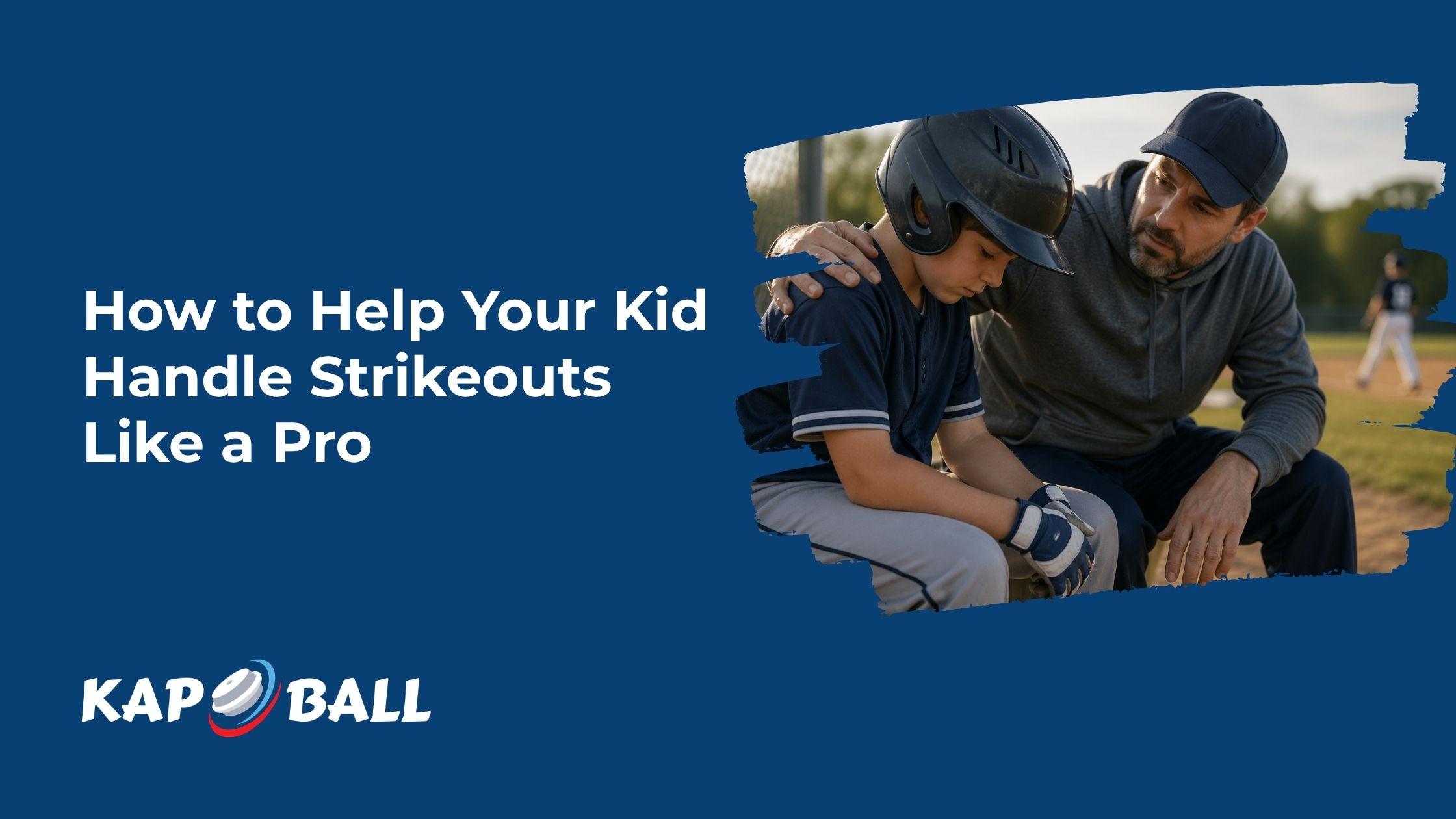
Every parent has seen it. The walk back to the dugout with the head down. The helmet that comes off a little too hard. The eyes that are trying not to cry — or not trying hard enough.
Strikeouts hurt. And if you've ever watched your kid walk back to the bench after one, you know they hurt you a little too.
But here's what I need you to understand: strikeouts are not the problem. How a player responds to them is what actually determines their future in this game.
The best hitters in the world fail seven out of ten times and get paid millions of dollars to do it. This sport is built on failure. The players who make it aren't the ones who never strike out — they're the ones who learned how to carry a strikeout without letting it carry them.
Here's how you help your kid get there.
First, Let Them Feel It
Before you say anything, give them a moment.
I know the instinct is to fix it immediately. Walk over, put a hand on the shoulder, say something encouraging. But if you jump in too fast, the message you're sending — even with the best intentions — is that their feelings need to be corrected along with their swing.
Let them feel the frustration. It means they care. A kid who's frustrated after a strikeout is a kid who wants to get better. That's a foundation you can build on.
After a minute or two, then you step in. Not with a swing tip. Not with "you should have swung at that second pitch." Just presence. A hand on the back. "You good?" That's enough to start.
Watch Your Words at the Plate
This one is for the parents on the fence or in the bleachers.
The words you say — or yell — during an at-bat shape how your kid processes the outcome before they've even walked back to the dugout. "Come on, you've got this!" right before a called third strike lands differently than silence would. Now they didn't just strike out. They struck out after you told them they had it.
Keep your words simple and your voice calm. Cheer for effort, not outcome. "Good at-bat" after a tough strikeout that ended in a full count communicates something powerful: I see more than just the result.
That reframe — effort over outcome — is one of the most important things you can model for a young player.
Teach Them the Reset Routine
Elite athletes don't just feel their emotions differently. They have systems for moving through them faster.
Help your kid develop a strikeout reset routine — a short, physical ritual they do every time they come back to the dugout after a tough at-bat. It could be:
Taking three slow, deep breaths before sitting down
Grabbing their water bottle and taking a drink before they do anything else
A specific phrase they say to themselves — something they own, something that means "next pitch"
The goal isn't to feel nothing. The goal is to have a bridge between the emotion and the next moment. A reset routine gives them that bridge. Over time it becomes automatic — something that happens between strikeouts and the next at-bat without them even thinking about it.
Separate the Kid from the At-Bat
One of the most damaging things a young player can believe is that a strikeout says something about who they are.
It doesn't. It says something about one sequence of pitches on one day. That's it.
Your job as the parent is to keep reinforcing that separation. Not in a dismissive way — not "oh it doesn't matter" — but in a grounded, honest way. "That at-bat is done. It doesn't follow you. Who are you next time you step in?"
Help them build an identity that is bigger than any single at-bat. A player who knows they're a hard worker, a competitor, a good teammate — that player has somewhere to stand when the strikeouts come. And they will come. For everyone.
Use Practice to Build Confidence, Not Just Skill
Here's something coaches don't talk about enough: confidence at the plate is built in practice, not in games.
When a kid goes into an at-bat unsure of their hands, unsure of their timing, unsure of their ability to make contact — they're already playing from behind. The strikeout almost doesn't matter at that point because the doubt got there first.
The antidote is reps that build real belief. Not just swinging — making contact. Consistent, confidence-building contact in practice that tells a player's body and brain: I can do this.
That's exactly why training tools that demand precision — like hitting a small target with a skinny bat — build a different kind of hitter. When your kid has spent weeks making contact on something the size of a bottle cap, a regulation baseball starts to look like a watermelon. That confidence is real. And it shows up when it counts.
Talk About It After the Game — Not During
The car ride home is sacred territory. Use it well.
The worst thing you can do is break down the at-bat while you're still in the parking lot. Emotions are high, perspective is low, and nothing productive gets built in that moment.
Wait until later — dinner, before bed, the next morning. Then ask open questions instead of giving evaluations. "What did you feel like at the plate today?" gets you further than "I think you were pulling your shoulder." One opens a conversation. The other closes a player down.
When they talk, listen more than you speak. You might be surprised what they already know about what happened. Kids are often more self-aware than we give them credit for. Your job is to help them articulate it, not narrate it for them.
Normalize It With the Numbers
At the right age, use the actual numbers to your advantage.
Even the best hitters in Major League Baseball get out sixty to seventy percent of the time. Ted Williams — the greatest hitter who ever lived — had a career batting average of .344. That means he failed to get a hit in more than half his at-bats across an entire Hall of Fame career.
Share that with your kid. Not to minimize the strikeout, but to contextualize it. Failure is baked into this game at every level. The goal isn't to eliminate it. The goal is to keep stepping in.
A player who understands that strikeouts are part of baseball — not a sign that they don't belong — will step into the box differently. Looser. More present. Ready to compete instead of trying not to fail.
The Bottom Line
Helping your kid handle strikeouts better isn't about convincing them strikeouts don't matter. It's about building a player who is bigger than any single at-bat.
Let them feel it. Watch what you say. Give them a reset routine. Separate their identity from the outcome. Build real confidence in practice. Have the real conversations later.
Do those things consistently, and you won't just raise a kid who handles strikeouts better. You'll raise a competitor — one who steps back into the box ready to go, every single time.
That's the player you're building. Don't let a strikeout convince either of you otherwise.