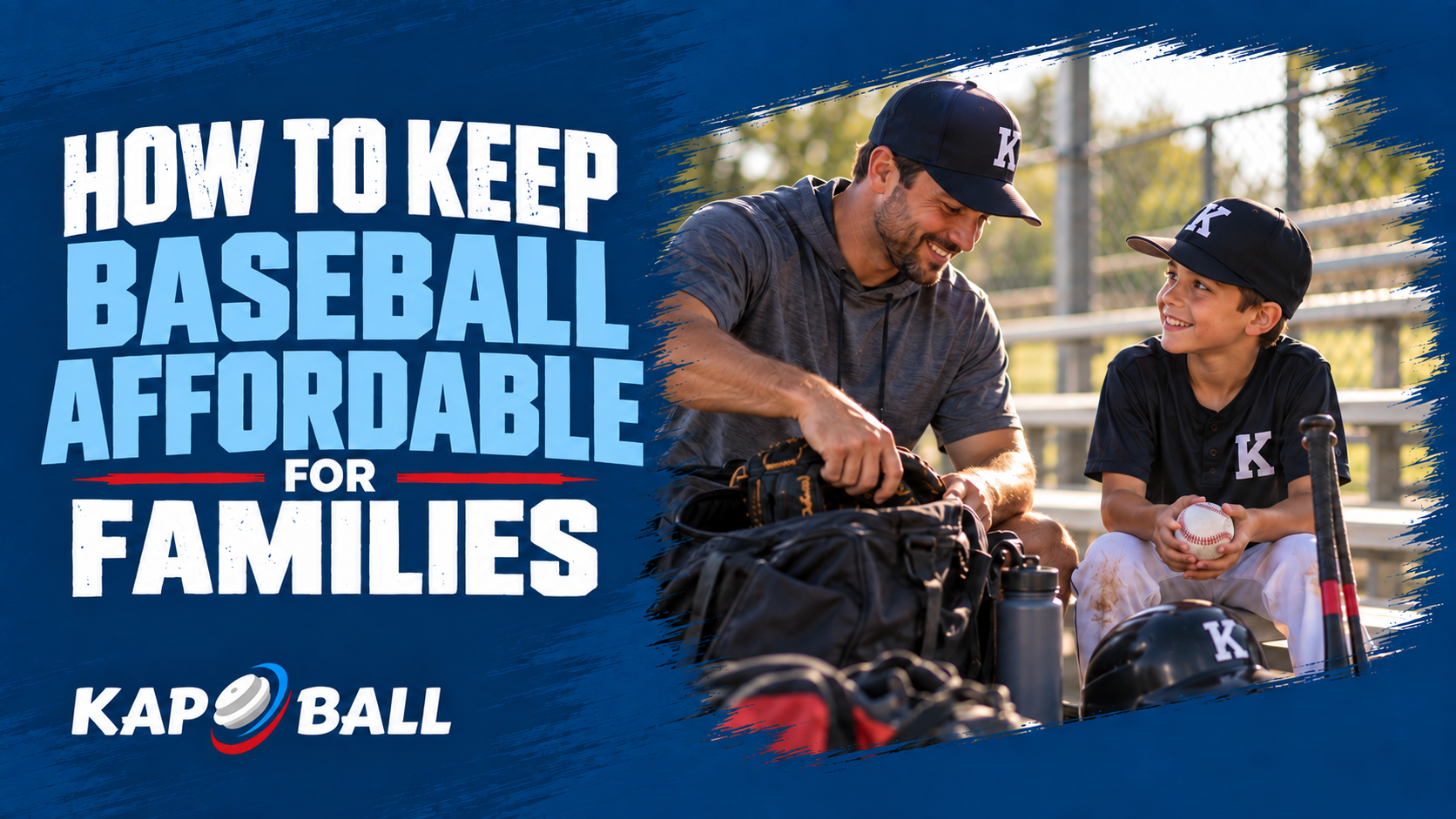
How to Keep Baseball Affordable for Families
If your child loves baseball, you want to give them every opportunity to enjoy the game and get better.
But let's be honest.
Youth baseball can get expensive.
Registration fees. Equipment. Uniforms. Travel. Private lessons. Camps. Tournament fees. Gas. Hotels. Food.
Before you know it, what started as a simple sport your child enjoys can become a major expense for the entire family.
The good news is that your child does not need the most expensive baseball experience to become a better player.
You can develop a young athlete, give them great opportunities, and keep baseball affordable at the same time.
The key is knowing where your money actually makes a difference.
Your Child Doesn't Need Every Piece of Equipment
Walk into a baseball store and you'll find plenty of equipment that looks like it will make your child better.
New bats.
Specialized gloves.
Training aids.
Hitting equipment.
Pitching equipment.
The list goes on.
But before buying something, ask yourself:
"Will this actually help my child develop?"
Young players don't need a garage full of equipment.
A glove that fits properly, a bat that is appropriate for the player, a few baseballs, and a safe place to practice can go a long way.
Sometimes the simplest tools create the best training.
Playing catch in the backyard is still valuable.
Taking swings is still valuable.
Fielding ground balls is still valuable.
You don't need to spend hundreds of dollars every month to give your child quality repetitions.
Look for Used Equipment
Baseball equipment doesn't always have to be purchased new.
Kids grow quickly.
They outgrow gloves.
They move to different bat sizes.
They change positions.
They may stop playing altogether.
That means there is often plenty of quality used equipment available from other baseball families.
Check local baseball groups, equipment exchanges, sporting-goods resale stores, or families in your league.
Just make sure the equipment is safe, legal for your league, and appropriate for your child's size and level of play.
A used piece of equipment that fits properly can be much better than an expensive piece of equipment your child has simply outgrown.
Don't Feel Like Private Lessons Are Required
Private instruction can be helpful.
A good coach can identify problems, provide direction, and help a player understand what they need to work on.
But that doesn't mean your child needs private lessons every week.
One good lesson can give you something much more valuable than a single hour of instruction.
A plan.
If a coach shows your child what they need to improve, you can spend the next several weeks working on those skills at home.
That is where parents can make a big difference.
Ask the coach:
"What can we work on between lessons?"
Now you're not paying someone to do every repetition.
You're using instruction to teach your child what to practice.
You Can Practice Baseball Almost Anywhere
This is one of the great things about baseball.
You don't always need a field.
You don't even need a batting cage.
There are plenty of skills you can work on in a backyard, driveway, open space, or other appropriate area.
Play catch.
Work on footwork.
Practice receiving ground balls.
Do tee work in a safe location.
Work on throwing mechanics.
Practice movement patterns.
Improve conditioning.
Talk through game situations.
Some of the most important development happens during simple repetitions.
And many of those repetitions cost nothing.
Be Careful About Chasing Every Opportunity
This is where youth baseball can become expensive quickly.
A family sees a tournament.
Then a showcase.
Then a camp.
Then a private lesson.
Then another tournament.
Then another training program.
Before long, the calendar is packed and the budget is stretched.
Ask yourself whether your child actually needs the opportunity.
More baseball isn't automatically better baseball.
If your child is exhausted from constantly traveling and competing, adding another expensive event isn't necessarily helping development.
Sometimes a simple practice at home is more valuable.
Choose the Right Level of Competition
Not every player needs to play on the most expensive team available.
And playing on the most expensive team doesn't guarantee better development.
Look at the environment.
Does your child get opportunities to play?
Are they being coached?
Are they learning?
Are they enjoying themselves?
Is the competition appropriate?
Those questions matter more than the price tag.
Sometimes the less expensive option gives a young player more playing time and more opportunities to develop.
That's a win.
Share Costs When You Can
Baseball families are often more willing to help each other than we realize.
Maybe one family has a pitching machine.
Another has a net.
Another has access to a field.
Another has extra baseballs.
Instead of every family buying everything, find ways to share resources.
You can organize a small group practice.
Take turns bringing equipment.
Share rides to practice.
Split travel costs when appropriate.
These little decisions can make a meaningful difference over an entire season.
Carpool When Possible
Travel is one of those expenses that sneaks up on families.
Gas.
Parking.
Hotels.
Meals.
And if you're traveling multiple times a week, those costs add up quickly.
Carpooling can help.
If another family lives nearby and you're comfortable with the arrangement, take turns driving to practices or games.
It saves money.
It also gives the kids more time together.
Just make sure everyone understands the schedule and responsibilities ahead of time.
You Don't Have To Say Yes To Everything
This may be the hardest advice for parents.
Sometimes you need to say no.
Your child may get invited to another tournament.
Another camp.
Another team.
Another training opportunity.
That doesn't mean you have to participate.
A young player's development is not determined by how many baseball activities their family can afford.
If an opportunity doesn't fit your budget, it's okay to pass.
You aren't holding your child back by protecting your family's finances.
In fact, you're teaching them an important lesson about priorities.
Focus On Development, Not Spending
One of the easiest traps for parents is assuming that spending more means doing more for your child.
It doesn't.
Your child doesn't know how much you spent on their bat when they're standing in the batter's box.
They don't become more confident because their equipment cost more.
They improve because they practice.
They learn because someone teaches them.
They develop because they get quality repetitions.
They grow because they experience challenges and learn how to handle them.
Money can provide opportunities, but it can't replace effort.
Don't Let Money Become Pressure
This is another reason keeping baseball affordable matters.
If parents spend a huge amount of money on their child's baseball career, it can unintentionally create pressure.
The player may start thinking:
"My parents spent all this money. I have to perform."
That's not what we want.
Baseball should still feel like baseball.
Your child should be allowed to strike out.
They should be allowed to make errors.
They should be allowed to have a bad game.
They should be allowed to learn.
Keeping the financial investment reasonable can actually help keep the emotional pressure reasonable too.
Invest In The Things That Matter Most
If you're going to spend money on baseball, be intentional about it.
I'd prioritize things like:
Good coaching.
Properly fitted equipment.
Opportunities to play.
Quality practice.
Healthy recovery.
Experiences your child genuinely enjoys.
You don't need everything.
You need the right things.
And sometimes the best investment isn't another baseball product or tournament.
It's simply spending time with your child.
Play catch.
Take some swings.
Talk about the game.
Ask what they're working on.
Those moments don't show up on a receipt, but they can be incredibly valuable.
Baseball Shouldn't Become A Financial Competition
It's easy to look around at other families.
Someone has the newest bat.
Someone else is traveling every weekend.
Another player has private lessons twice a week.
It can make you feel like you're falling behind.
Don't fall into that trap.
Your child's baseball journey is their own.
You don't need to match another family's spending.
You need to figure out what works for your family and your child.
A healthy baseball experience should fit into your family's life, not take over your family's life.
Next Step
Take 15 minutes this week and look at everything your family currently spends on baseball. Don't just look at registration fees. Look at equipment, lessons, travel, tournaments, food, and all the smaller expenses that add up. Then ask one question about each expense: "Is this actually helping my child develop or enjoy the game?" Keep the things that provide real value and look for ways to simplify the rest. Your child doesn't need the most expensive baseball experience. They need opportunities to learn, practice, compete, and enjoy the game. Keep baseball sustainable for your family, and you'll give your child something far more valuable than another piece of equipment: the ability to keep playing.

