How to Know If Baseball Is Right for Your Child
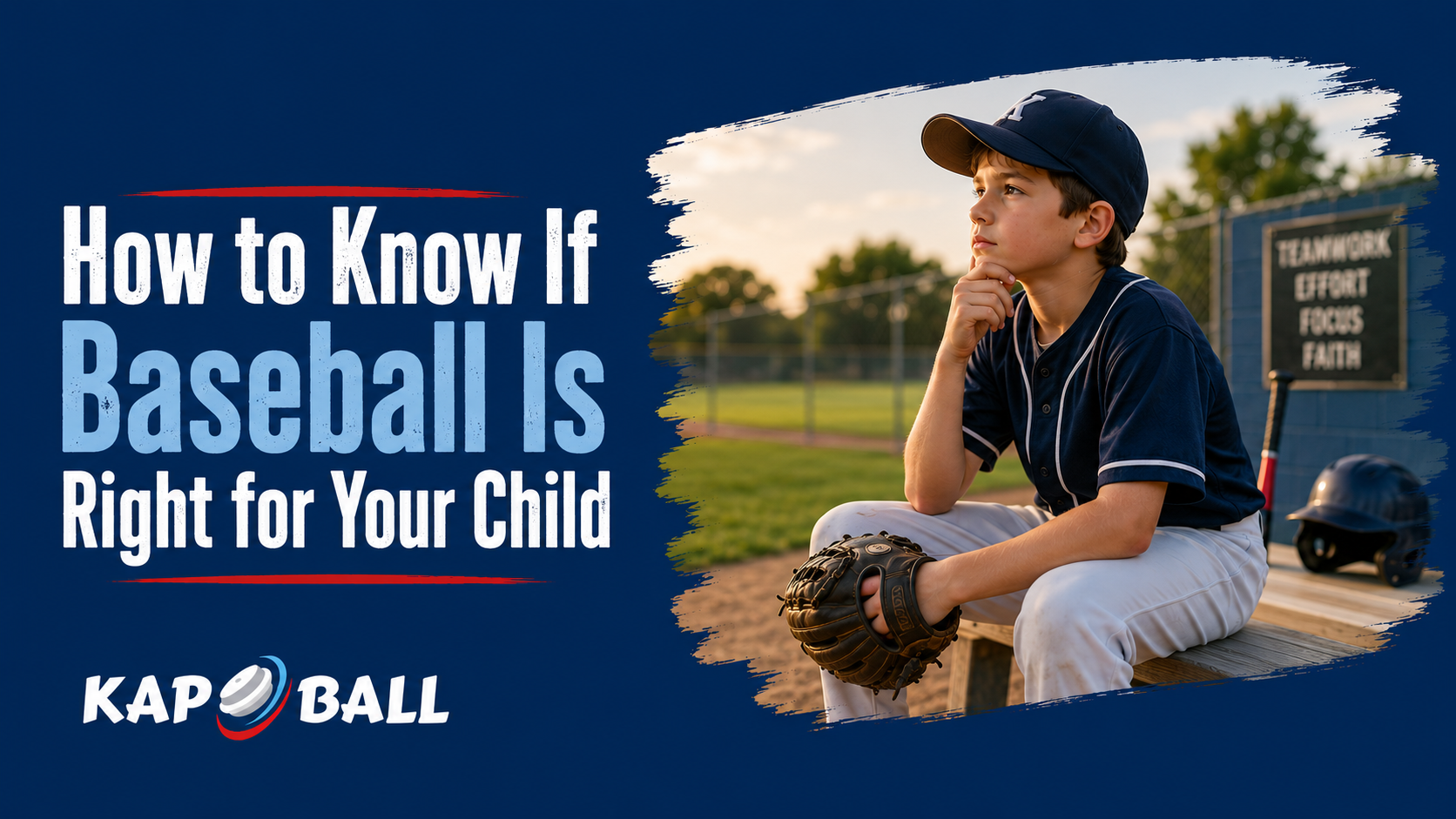
Choosing a sport for your child can feel like a bigger decision than it really needs to be.
There are travel teams, recreational leagues, private lessons, camps, tournaments, and plenty of opinions from other parents.
It can make you wonder:
How do I know if baseball is actually the right sport for my child?
My answer is pretty simple.
Don't start by asking whether your child is talented enough.
Start by asking whether they enjoy the game, want to learn, and feel good being part of it.
Youth baseball sports should give kids an opportunity to develop skills, build confidence, make friends, learn how to compete, and most importantly, enjoy being active.
The right sport doesn't have to be the one your child is immediately great at.
It should be one they are willing to come back to.
Does Your Child Enjoy Baseball?
This is the first question I'd ask.
Not whether they're good at it.
Not whether they made the best team.
Not whether a coach thinks they have potential.
Do they enjoy it?
Maybe your child loves hitting.
Maybe they love playing catch.
Maybe they love being around teammates.
Maybe they love the competition.
Maybe they simply enjoy being outside with a glove in their hand.
Those are all good reasons to keep exploring baseball.
And remember, enjoyment doesn't mean your child has to love every practice.
Every athlete has difficult days.
The bigger question is whether they generally look forward to playing.
Don't Confuse Talent With Potential
I've seen plenty of young players who weren't especially skilled when they first started.
That's completely normal.
Kids develop at different rates.
Some players have natural coordination early. Others need more time to learn how their bodies move.
Some understand the game quickly. Others need hundreds of repetitions before things begin to click.
That's why I don't recommend deciding whether baseball is right for your child based on early performance.
Instead, watch how they respond to learning.
Do they listen?
Do they try again after making a mistake?
Do they get excited when they learn something new?
Do they want to practice a skill they haven't mastered yet?
Those behaviors tell you much more about long-term potential than how many hits your child gets at age eight.
Look At Their Personality
Baseball has something for a lot of different personalities.
Some kids love being part of a team.
Some enjoy the individual challenge of hitting.
Some love the strategy.
Some enjoy playing defense.
Some are naturally competitive.
Others are quieter and enjoy the rhythm of the game.
That's one of the things I love about baseball.
There are so many different ways for a child to contribute.
Your child doesn't have to be the loudest player on the field to belong.
They don't have to be the biggest player.
They don't have to be the fastest player.
They just need opportunities to find where they fit.
Is Your Child Curious About Baseball?
Pay attention to what happens when nobody is telling your child what to do.
Do they pick up a ball and throw it?
Do they ask questions about the game?
Do they watch baseball with you?
Do they want to play catch?
Do they ask to hit?
Do they get excited when they see a field?
Those little signals can tell you something.
You don't need to manufacture a passion for baseball.
Give your child opportunities to experience it and see whether the interest grows naturally.
Don't Make Your Child Play Baseball Because You Did
This is a tough one for parents.
Maybe you played baseball growing up.
Maybe you always dreamed about seeing your child play.
Maybe you love the sport and want to share that experience with them.
That's understandable.
But your child is not you.
They may love baseball.
They may love soccer.
They may love basketball.
They may love swimming.
They may want to try several sports.
That's okay.
Our job isn't to decide exactly who our children are going to become.
Our job is to give them opportunities to discover who they are.
Let Kids Try Different Sports
If your child is young, I usually don't think you need to rush into specialization.
Playing multiple sports can help kids develop different movement skills, coordination, athletic awareness, and confidence.
It also gives them a chance to discover what they genuinely enjoy.
Your child might play baseball in the spring, soccer in the fall, and basketball in the winter.
That's not a lack of commitment.
For a young athlete, it can be part of the discovery process.
Eventually, your child may decide that baseball is the sport they want to focus on.
When that decision comes from them, it can be much more meaningful.
Watch How They Handle The Hard Parts
Every sport has difficult moments.
Baseball has plenty.
Your child will strike out.
They'll make errors.
They'll sit on the bench.
They'll lose games.
They'll have practices where nothing seems to work.
That's normal.
What matters is how they respond.
Do they want to quit every time something gets difficult?
Or do they eventually want to try again?
A child doesn't have to love failure.
Nobody does.
But if they can learn to work through frustration and still find enjoyment in the game, that's a strong sign that baseball may be a good fit.
Pay Attention To The Coach
Sometimes the question isn't whether baseball is right for your child.
Sometimes the question is whether that particular baseball environment is right for your child.
A good youth coach should help kids learn.
They should create an environment where players can make mistakes without being humiliated.
They should teach effort, teamwork, responsibility, and respect.
They should understand that young athletes are still developing.
If your child loves baseball but consistently feels anxious, embarrassed, or afraid to make mistakes, don't automatically assume baseball is the problem.
The environment matters.
A different coach, team, or level of competition may completely change the experience.
Ask Your Child, Don't Just Observe Them
Sometimes the easiest way to understand what your child wants is to ask.
Try questions like:
"What's your favorite part of baseball?"
"What's your least favorite part?"
"Do you want to keep playing?"
"Is there something you'd like to get better at?"
"Would you want to try another sport too?"
Then listen.
Don't immediately correct their answers.
Don't turn the conversation into a sales pitch for baseball.
Let them talk.
You may learn more from five minutes of honest conversation than you will from watching ten games.
The Right Sport Should Help Your Child Grow
Ultimately, that's what we're looking for.
We want an activity that challenges our kids without overwhelming them.
We want them to learn how to work hard.
We want them to experience teamwork.
We want them to learn how to handle winning and losing.
We want them to become more confident.
We want them to develop healthy habits.
And we want them to have fun.
Baseball can provide all of those things.
But it doesn't have to be the right sport for every child.
And that's okay.
The goal isn't to make every child a baseball player.
The goal is to help every child find an activity where they can grow.
What If Your Child Wants To Quit?
Don't panic.
"Quitting" doesn't always mean your child doesn't like baseball.
They may be tired.
They may dislike their current team.
They may feel frustrated by a skill they're struggling to learn.
They may want to try something new.
Or they may genuinely decide baseball isn't for them.
Have a conversation before making a decision.
Ask what is bothering them.
If they're overwhelmed, maybe they need a break.
If they don't like the environment, maybe a different team is the answer.
If they've discovered another sport they love, that deserves consideration too.
Our kids aren't making a lifetime commitment when they join a youth sports team.
They're learning.
Let The Love Of The Game Develop Naturally
If baseball is right for your child, you don't need to force the relationship.
Give them opportunities.
Play catch in the backyard.
Take them to a game.
Let them swing the bat.
Let them make mistakes.
Let them try different positions.
Let them play with friends.
Let them experience the game.
Then pay attention to what happens.
Sometimes the clearest sign that baseball is right for your child is simple.
They keep asking to go back.
Next Step
This week, take baseball off the performance checklist and simply watch your child. Ask what they enjoy about the game, what they find difficult, and whether they want to keep exploring it. If they're excited to play, give them more opportunities. If they're unsure, let them try another sport without making it a big decision. Your job isn't to choose your child's entire athletic future today. Your job is to help them discover what they enjoy and where they can grow. If baseball becomes that sport, Kapball will be here to help you support them along the way.

