How to Turn Practice Into Play: Making Baseball Fun Again | Kapball
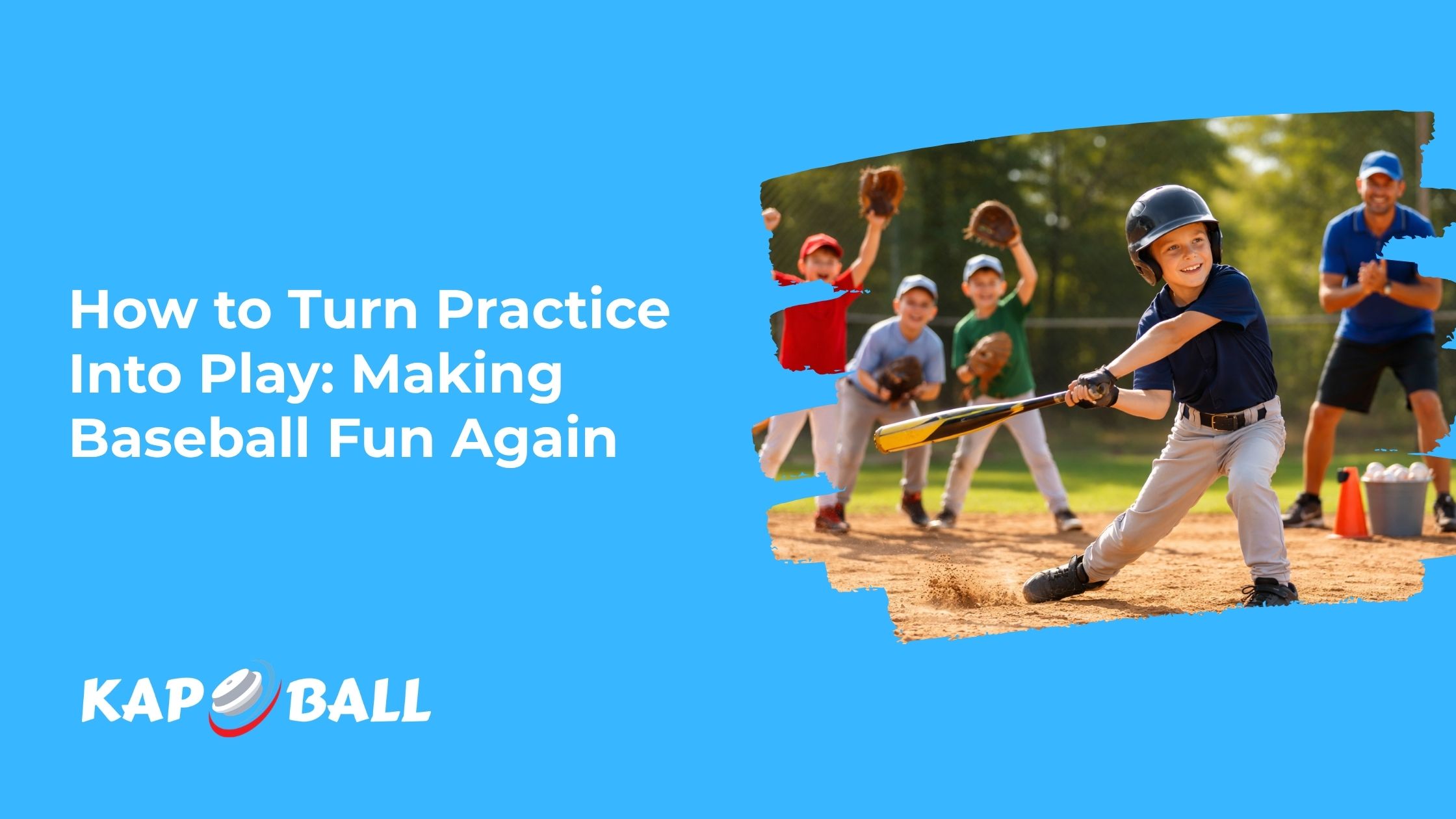
Let me ask you something. When did practice start feeling like punishment?
I've coached long enough to know the signs. The kid who drags his feet to the tee. The one checking how many swings are left instead of locking in on the next one. The player who's physically at practice but mentally somewhere else entirely.
That's not a talent problem. That's a fun problem. And it's completely fixable.
Why Kids Stop Loving the Game
Here's the truth most coaches won't say out loud: repetition without purpose kills motivation. We pile on swings, soft toss, and cone drills — and wonder why kids burn out before they reach high school.
Kids aren't wired to grind abstract reps. They're wired for challenge, competition, and instant feedback. When practice gives them all three, they don't want to leave the yard. When it doesn't, they count down the minutes.
The fix isn't working harder. It's working smarter — with structure that makes the kid chase the reps instead of counting them.
The Core Shift: From Drills to Games
Every drill you do right now can be turned into a game with one ingredient: a score.
Score means stakes. Stakes mean focus. Focused reps build real skill. That's the whole formula.
Add a point system, a personal best challenge, a timed component, or a little sibling rivalry — and the exact same drill that felt boring becomes something your kid wants to win. The mechanics are identical. The experience is completely different.
Five Ways to Gamify Your Next Session
1) Point Streak Challenge
Assign points for solid contact, zero for misses. First to 20 wins. Suddenly every swing has something riding on it.
2) Beat Your Best
Track last session's top streak. No opponent needed — just them vs. their own number. Kids will surprise you how hard they chase a personal record.
3) Time Trial
How many solid contacts in 60 seconds? Set a timer, set a baseline, then chase it every week. Visible progress is its own motivation.
4) Boss Level
Parent or sibling acts as the "boss." To finish practice, the kid has to beat the boss's score from a previous session. Instant buy-in, zero complaints.
5) Field Goal Mode
Pick a target zone and score it like field goals — closer targets worth more. Teaches directional hitting while keeping it competitive.
Cut the Setup Time. Use Your Backyard.
One of the biggest killers of consistent practice is the logistics. Loading up the car, driving to the cage, waiting for lanes...by the time you're hitting, you've already lost 45 minutes and half your energy.
The best players I've seen develop? They put in work in tight spaces. Driveways. Backyards. Parking lots at dusk. They didn't wait for perfect conditions. They made the conditions work.
That's actually the origin of Kapball — a training tool and game built around hitting a bottle cap with a skinny bat, inspired by the Dominican street game vitilla. No cage. No pitcher. No wide open field required. Just a small target that demands real hand-eye precision, and reps that you can get in your own backyard any day of the week.
The same Dominican neighborhoods that produced Juan Soto, Vlad Guerrero Jr., Fernando Tatis Jr., and Starling Marte weren't producing legends through cage sessions. They were playing in the street. Small ball. Big contact skills. And they never wanted to stop.
Let Them Lead Sometimes
Here's something I've seen work over and over: give the kid ownership of one part of practice. Let them pick the drill. Let them set the target. Let them choose the challenge for that day.
When a player designs the game, they're invested in the outcome. They're not going through the motions — they're running the show. That's a huge mindset shift, and it costs you nothing.
You're still steering the session. You're still getting quality reps. But now they feel like it was their idea. And kids work hardest for their own ideas.
Keep Sessions Short and Leave Them Wanting More
Longer practices are not better practices. For younger players especially, 20 focused minutes beats 90 distracted ones every time.
End the session when they're still having fun — not when they're exhausted and done. That way, the last memory they have of practice is a good one. They'll be asking to go again tomorrow instead of asking when it's over today.
The goal isn't to maximize reps in a single session. The goal is to make them want to come back.
The Bottom Line
Making baseball practice fun again doesn't mean going easy. It means being smart about how you structure work so that kids want to do it — and keep doing it year after year.
Add competition. Add stakes. Cut the commute. Use small spaces. Let them lead. End early.
Do those things, and you won't be dragging a kid to practice. You'll be the one calling time while they're still asking for one more round.
That's when you know you've got them. That's when real development starts.