How to Set Youth Baseball Goals That Actually Stick
How Should Youth Players Set Realistic Goals for the Season?
At the beginning of every baseball season, I hear young players say things like:
"I want to hit a home run."
"I want to make the All-Star team."
"I want to bat .500."
There's nothing wrong with dreaming big.
In fact, I encourage it.
But one of the biggest mistakes young athletes make is setting goals they can't fully control.
When that happens, frustration often follows.
The most successful players I've coached don't just set goals. They set the right goals.
Goals that keep them motivated, focused, and improving throughout the season.
Let's talk about how parents can help their players create goals that actually stick.
The Problem With Outcome-Based Goals
Many young athletes naturally focus on results.
They want more hits, more wins, more playing time, or more awards.
The challenge is that baseball is a game filled with variables.
A player can hit the ball hard and still make an out.
A pitcher can throw strikes and still give up hits.
A team can play well and still lose.
When kids focus only on outcomes, they often feel discouraged when those outcomes don't happen immediately.
That's why I encourage players to focus on what they can control.
Focus on Process Goals Instead
The best goals are process goals.
These are goals centered on actions and habits rather than results.
For example:
Instead of:
"I want to hit .400."
Try:
"I will take 25 quality swings four times per week."
Instead of:
"I want to make the All-Star team."
Try:
"I will arrive early to every practice ready to learn."
Instead of:
"I want to strike out fewer times."
Try:
"I will track every pitch until it reaches the catcher's glove."
Process goals give players something they can work on every single day.
And when the process improves, the results usually follow.
Use the Three-Goal System
One strategy I love for youth players is creating three simple goals for the season.
Goal #1: A Skill Goal
Choose one baseball skill to improve.
Examples:
Make more consistent contact
Improve throwing accuracy
Develop better fielding fundamentals
Increase swing confidence
This keeps players focused on growth.
Goal #2: A Habit Goal
Choose one practice habit to build.
Examples:
Practice 10 minutes three times per week
Complete a pregame routine
Take dry swings every evening
Play catch regularly with a parent
This creates consistency.
Goal #3: A Mindset Goal
Choose one mental skill to strengthen.
Examples:
Stay positive after mistakes
Encourage teammates more often
Focus on effort instead of results
Bounce back quickly after strikeouts
This helps players build resilience throughout the season.
Keep Goals Realistic and Age-Appropriate
One of the quickest ways to lose motivation is setting goals that feel impossible.
A goal should stretch a player without overwhelming them.
For younger athletes, simple is usually better.
A 9-year-old doesn't need a detailed performance plan.
They need clear, achievable goals they can understand and remember.
As a rule of thumb, if a player can't explain their goal in one sentence, it may be too complicated.
Write Goals Down
This sounds simple, but it makes a huge difference.
When goals stay in a player's head, they're easy to forget.
When goals are written down, they become real.
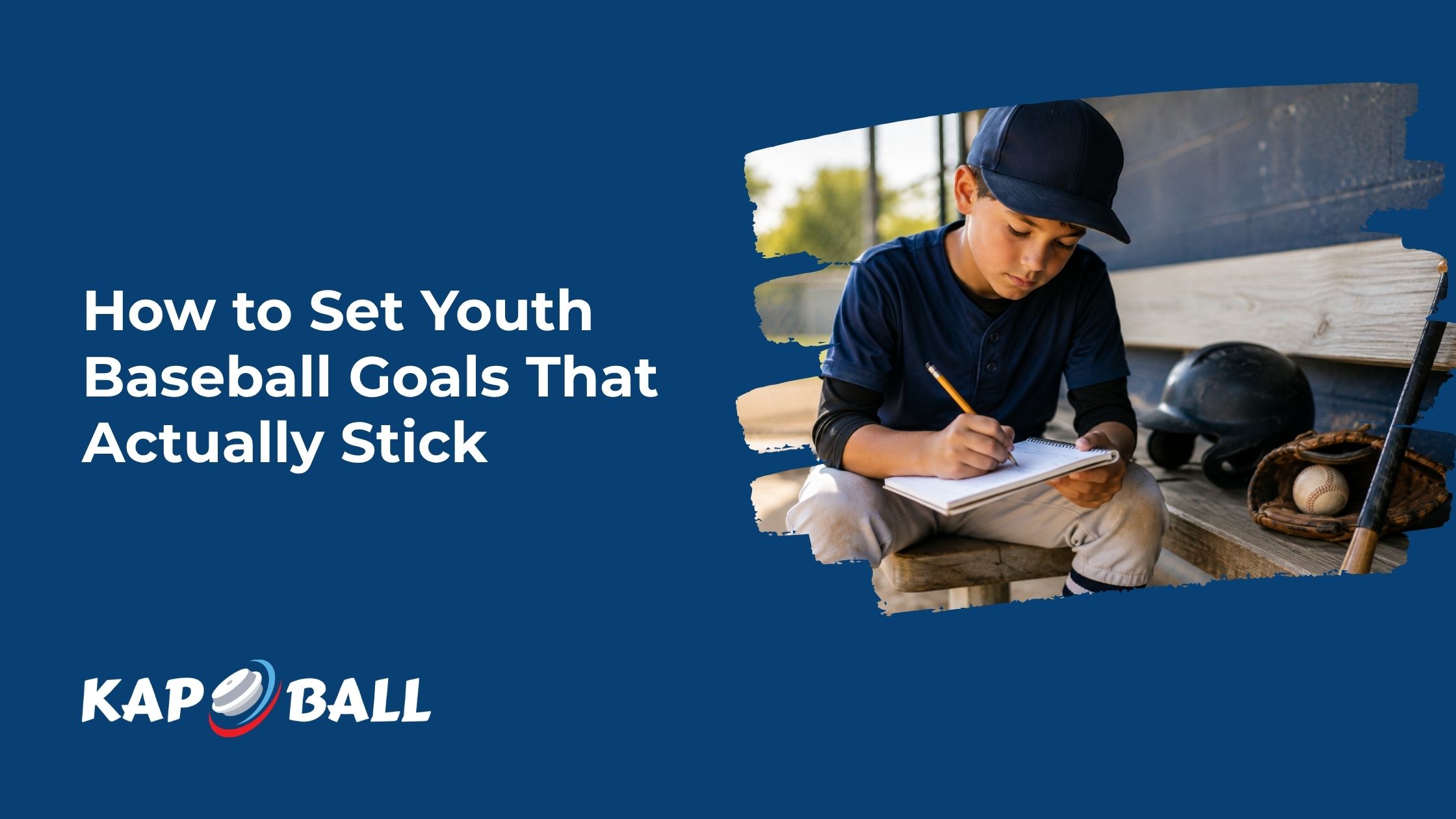
I encourage families to write goals on paper and place them somewhere visible.
A bedroom wall.
A bathroom mirror.
A baseball equipment bag.
Anywhere players can see them regularly.
The goal isn't pressure.
The goal is reminder.
Review Goals Throughout the Season
Many players set goals in March and forget about them by April.
Goals should be reviewed regularly.
Every few weeks, ask questions like:
What's going well?
What have you improved?
What feels challenging?
Does this goal still make sense?
Sometimes goals need adjustments.
That's okay.
Growth isn't always a straight line.
The important thing is staying engaged in the process.
What Parents Should Remember
As parents, our role isn't to set the goals for our kids.
Our role is to guide them.
Ask questions.
Listen to their answers.
Help them choose goals that focus on effort, learning, and improvement.
When players take ownership of their goals, they're much more likely to stay committed.
And that's where real development happens.
The Bigger Lesson
One of the most valuable things baseball teaches is how to work toward something over time.
Goals teach patience.
They teach discipline.
They teach accountability.
Most importantly, they teach kids that improvement doesn't happen overnight.
It happens one practice, one game, and one small step at a time.
That's a lesson that extends far beyond the baseball field.
Next Step
Sit down with your player this week and help them create one skill goal, one habit goal, and one mindset goal for the season. Keep them simple and achievable. Write them down and place them somewhere visible. Then check in together throughout the season. Small, consistent actions have a way of creating big results, and I'd love to hear what goals your player chooses.

