Kapball vs. Other Youth Baseball Hitting Tools: An Honest Look
The Question We Get All the Time
So, which youth baseball hitting tool is actually worth it?
If you've found this post, you're probably standing in a sporting goods store — or scrolling Amazon at 11pm — trying to figure out whether to buy a batting tee, a soft toss machine, a weighted training bat, a pitching machine, or something you saw a kid using on Instagram. The options are overwhelming, the prices range from $15 to $3,500, and everyone claims their tool builds better hitters.
We get it. And we want to give you a real answer — even when that answer isn't "buy Kapball."
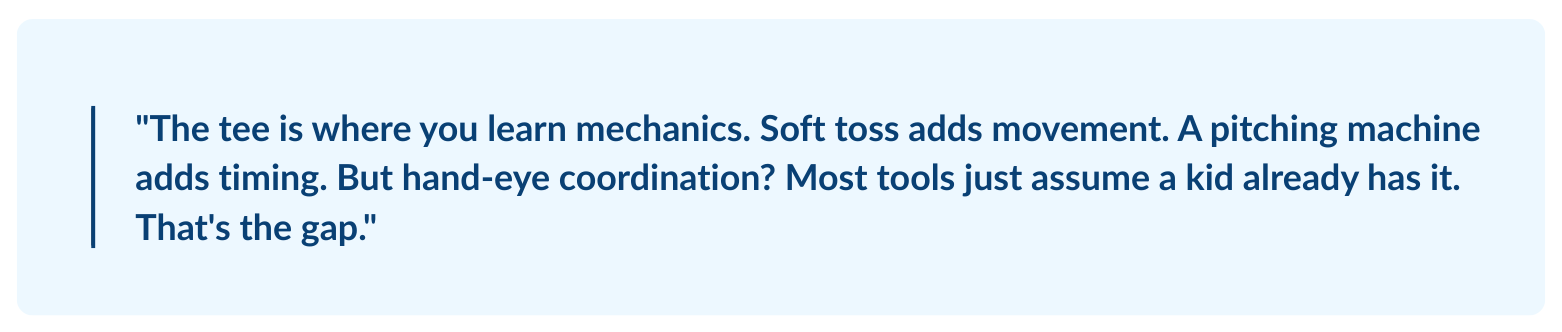
We created Kapball out of a real training problem Coach Hector kept seeing on the field: players with solid swing mechanics who still couldn't make consistent bat-to-ball contact when the pressure was on. Technique wasn't the gap. Hand-eye coordination was.
Here's what it looks like: the pitch comes in, and instead of watching the ball all the way to the bat, their eyes jump ahead to where they want it to go. The dream of the hit gets in the way of actually making it.
Kapball fixes that. The kap is small — you can't get away with looking somewhere else. The moment you try to do too much, you miss. Simple as that. That discipline carries straight to the plate: when a regulation baseball is what you're tracking, it suddenly looks a lot bigger.
We went back to a game that's been producing elite hitters in the Dominican Republic for generations and built a training tool around its core principle: train smaller, hit bigger.
But Kapball isn't the only tool on the market, and we'd never tell you it is. Let's walk through what's actually out there.
The Most Common Youth Hitting Tools, Reviewed Honestly
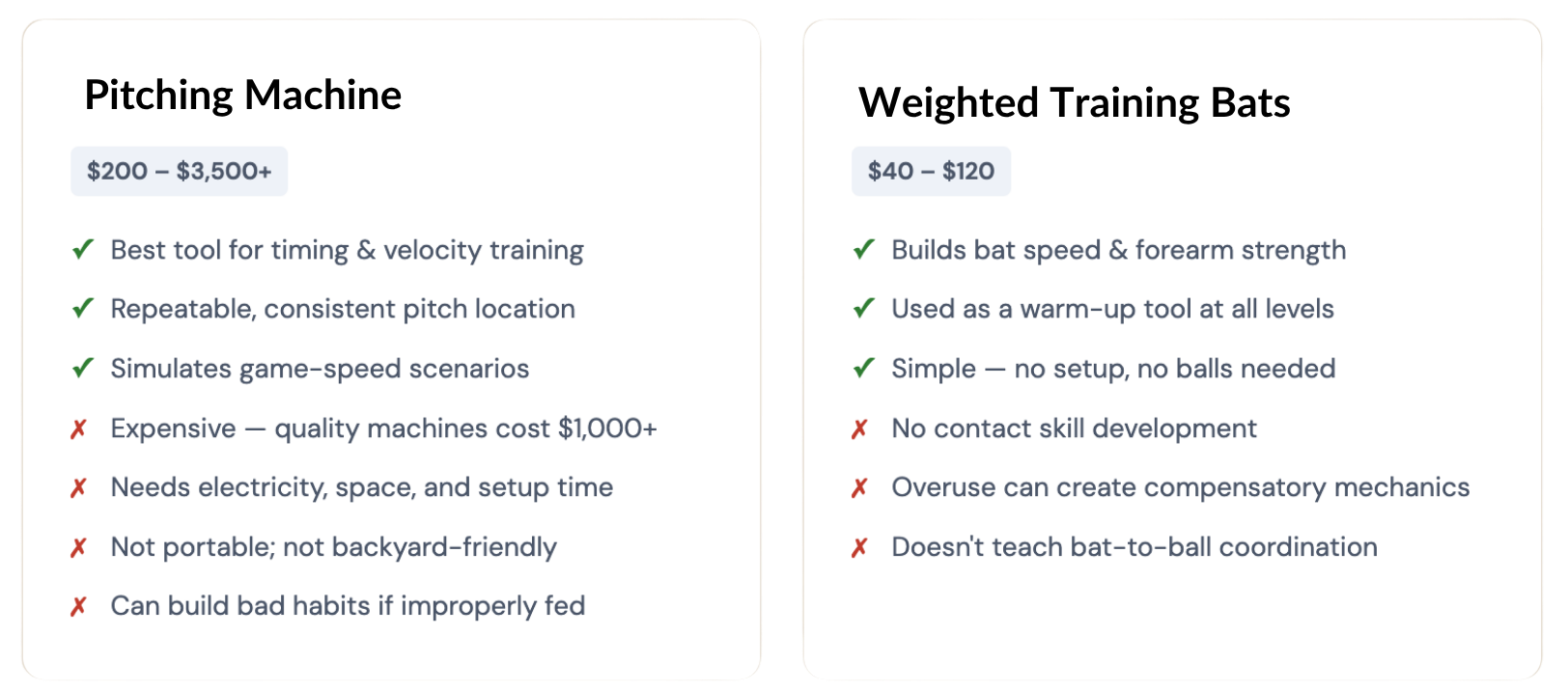
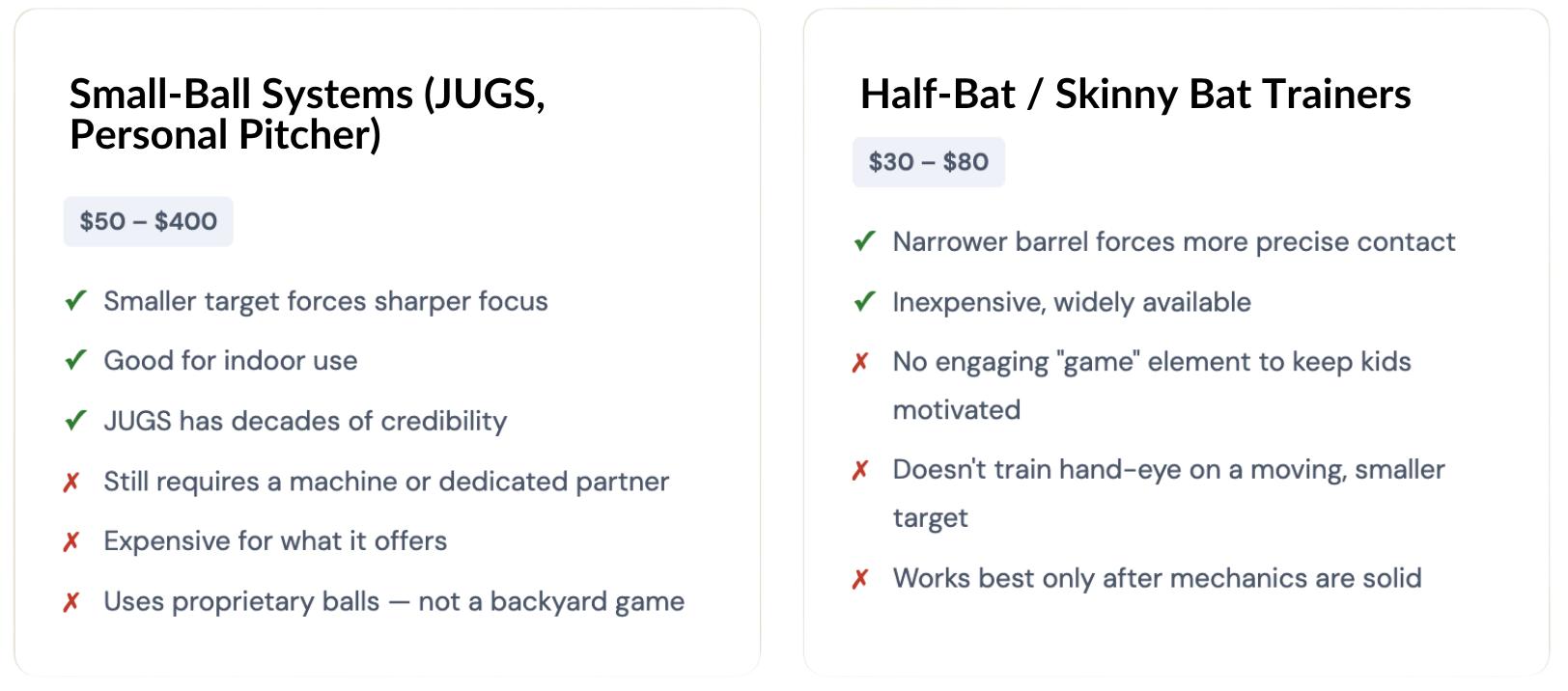
Head-to-Head Comparison Chart
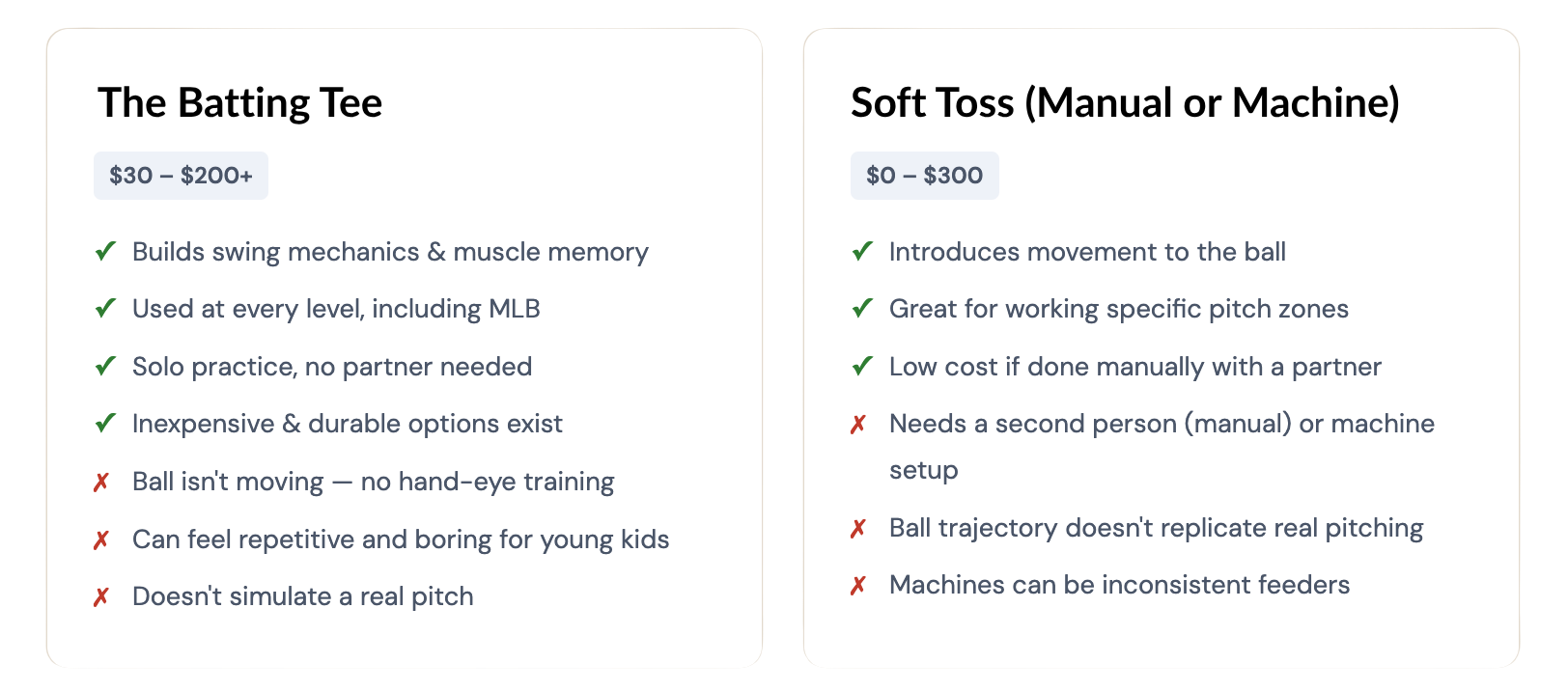
Every hitter needs different things at different stages. Here's how the most common tools stack up across the skills that actually determine whether a kid can hit:
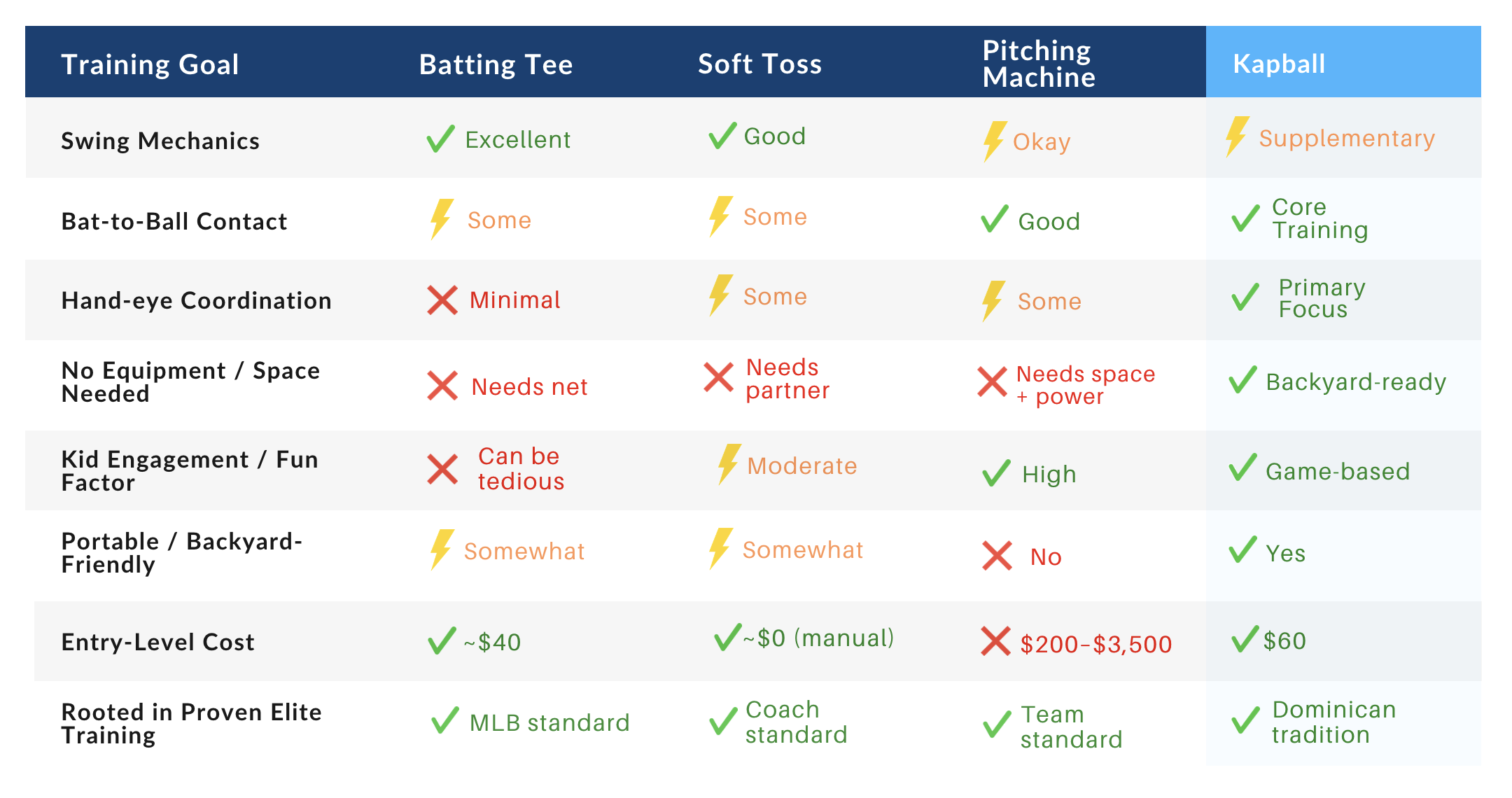
So Where Does Kapball Fit In?
Kapball was born out of a game called vitilla — a Dominican street game where kids hit bottle caps with a broomstick handle. It's not a gimmick. For decades, it's been the unofficial training ground for some of the most elite contact hitters in Major League Baseball. Players like Juan Soto, Vladimir Guerrero Jr., Fernando Tatis Jr., and Starling Marte all grew up swinging at objects far smaller than a regulation baseball.
The science behind it is simple: when you train your eyes and hands to connect with a small, moving target, a regulation baseball starts to look like a watermelon.
Kapball brings this same principle to your backyard with a skinnier bat and a small cap (the "kap") — making every swing a hand-eye coordination workout, not just a mechanics drill.
What Makes Kapball Different
Most tools train one thing. Kapball layers multiple skills in every rep:
Trains hand-eye coordination through a smaller, moving target — the single most under-trained skill in youth hitting
No batting cage, net, or electricity needed — just a bat, a kap, and open space
Game-based format keeps young players engaged long enough to actually improve
Pairs with your existing tee and soft toss work — it doesn't replace fundamentals, it amplifies them
We want to be clear: Kapball is not a replacement for tee work. A good batting tee is one of the most important tools a young hitter can own. If your player is working on swing path, hip rotation, or hand position, the tee is where that gets built. Kapball is what you do after — or alongside — that work to make sure the swing actually connects when the ball is moving.
Think of it this way: a batting tee builds the highway. Kapball teaches you to drive on it.
The Verdict: Which Tool Is Right for Your Player?
Every player is different, and no single tool does everything. Here's our honest recommendation based on where your hitter is right now:
If your player is just starting out (ages 5–8):
Start with a batting tee. Full stop. Getting the swing pattern in place is the foundation. Add Kapball once they can consistently make contact and are ready to have some fun with it.
If your player has the basics but struggles to make contact in games:
This is exactly who Kapball is built for. The mechanics are there — the hand-eye coordination just needs more reps. Kapball gives you those reps in a backyard game format that kids actually want to keep playing.
If your player is competitive (travel ball, tournaments):
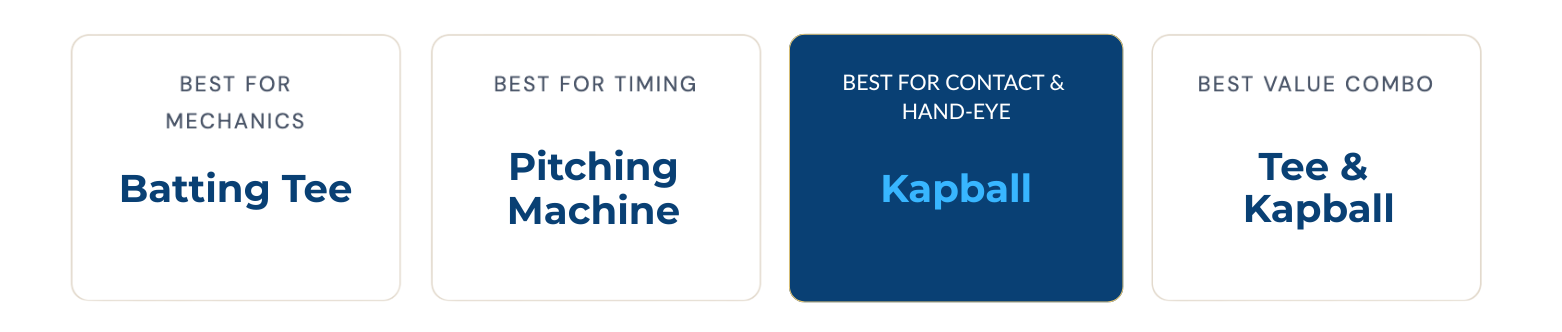
Use all of it. Tee work for mechanics, soft toss for adjustability, Kapball for sharpening contact, and a pitching machine if your team has access to one for timing. These tools are complementary, not competing.
If budget is a real concern:
A good tee + Kapball is arguably the highest-value combination available at any price point. You're covering mechanics and contact training without needing electricity, a cage, or a dedicated partner.
Bottom Line
The best hitting tool is the one your player actually uses. That means it needs to be accessible, affordable, and — especially for kids — actually fun. The batting tee is a classic for a reason. A pitching machine is incredible if you have the budget and the space. Soft toss is underrated when done with good technique.
And Kapball? Kapball fills the gap that every other tool leaves open. It trains the thing that makes mechanics matter in the first place: the ability to find the ball and put the barrel on it, every single time.
That's the skill that turns a technically sound swing into a hitter. And it's what we built Kapball to develop.

