Parents: How to Encourage Young Baseball Players Without Over-Coaching
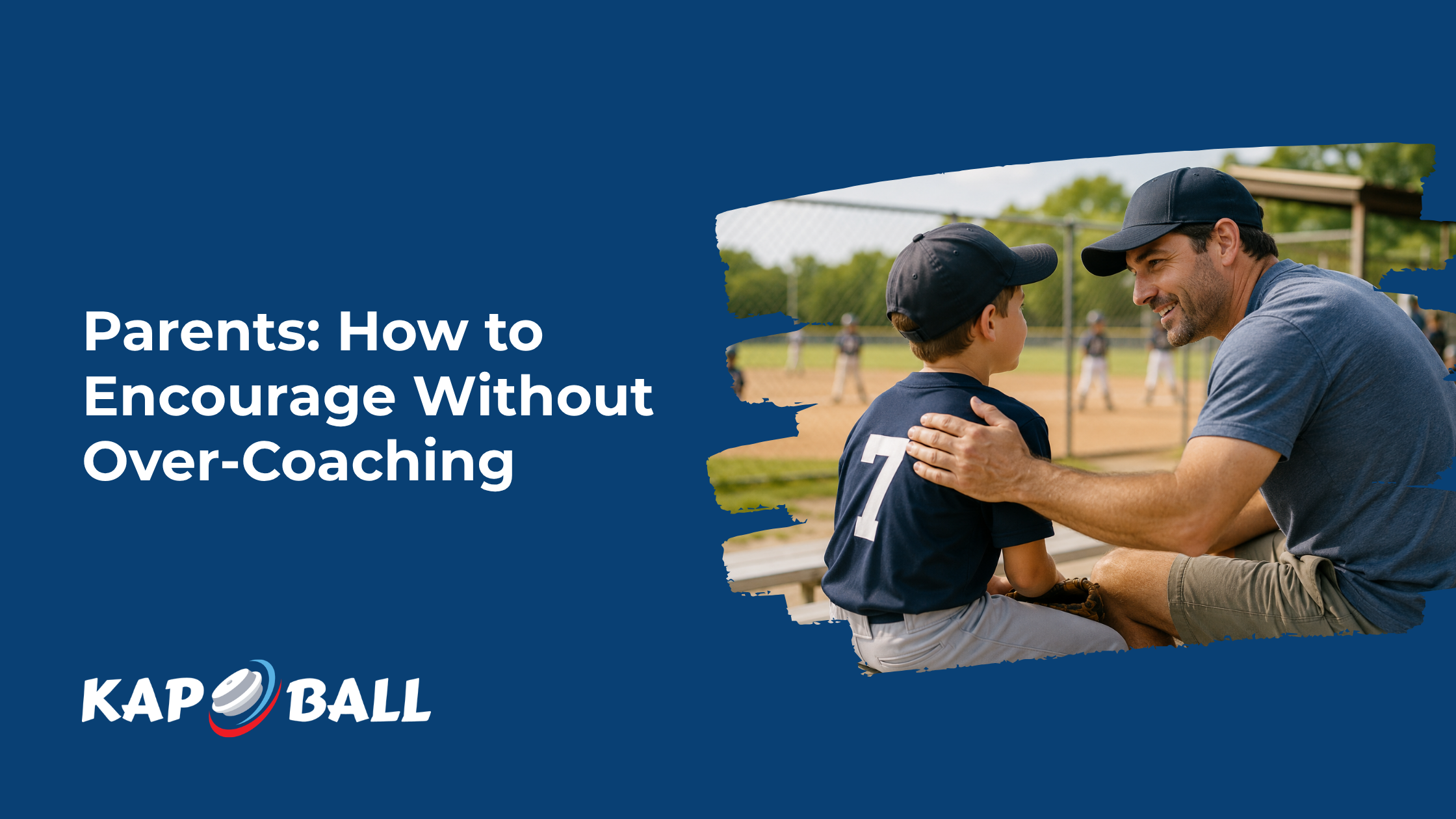
If you've ever driven home from a baseball game and found yourself replaying every at-bat with your child, you're not alone.
Most parents want the same thing. They want to help. They want to encourage. They want to see their son or daughter succeed.
The challenge is that encouragement and coaching are not the same thing.
As a coach, I've seen kids who love baseball slowly lose confidence because they feel like every game comes with another lesson, another correction, or another list of things they did wrong. I've also seen kids grow into confident players because they knew their parents were simply there to support them, no matter what happened on the field.
Let's talk about how you can be your child's biggest supporter without accidentally becoming a second coach.
Remember What Your Role Is
Your child's coach is responsible for teaching mechanics, strategy, and game situations.
Your role is different.
You provide emotional support. You help create a positive experience. You remind your child that baseball is something they get to enjoy, not just something they have to perform well in.
When parents stay in that role, kids often become more confident because they know they have one place where they don't have to worry about being evaluated.
Ask Better Questions After the Game
The ride home is where many young players start dreading conversations.
Instead of asking:
"Why didn't you swing?"
"What happened on that ground ball?"
"Why were you standing so far off the base?"
Try questions like:
"Did you have fun today?"
"What was your favorite part of the game?"
"What are you most proud of today?"
"What did you learn?"
These questions help your child reflect without feeling criticized.
Sometimes they'll bring up a mistake on their own. If they do, listen first. They may not need a solution. They may simply need someone who understands how frustrating baseball can be.
Trust the Process
Baseball is a game built on failure.
Even great hitters fail most of the time.
If your child strikes out today, it doesn't mean they're falling behind. If they miss a ground ball, it doesn't mean they suddenly forgot how to field.
Development happens over months and years, not one inning at a time.
The more patient you are, the more likely your child is to stay relaxed enough to improve.
Resist the Urge to Give Mechanical Advice
One of the hardest things for parents is watching a mistake they think they know how to fix.
You might notice your child dropped their back shoulder or stepped out of the batter's box.
The problem is that your child may already be working on something completely different with their coach.
Too many voices create confusion.
If they ask for advice, keep it simple.
If they don't ask, let the coach handle the mechanics.
Your support is far more valuable than another swing tip.
Celebrate Effort, Not Just Results
Kids can't always control whether they get a hit.
They can control their effort.
Notice the things that don't show up in the box score.
Did they hustle to first base?
Did they encourage a teammate?
Did they stay focused after making an error?
Did they bounce back after a tough inning?
Those are the habits that create confident athletes and strong teammates.
When you praise effort, resilience, and attitude, your child learns that success is about more than statistics.
Let Baseball Belong to Them
Sometimes parents become so invested that baseball starts feeling like a family project instead of the child's sport.
The best players I've coached usually have parents who are interested but not controlling.
They show up.
They cheer.
They listen.
They celebrate progress.
Most importantly, they allow their child to own both the victories and the challenges.
That ownership builds confidence, independence, and a lifelong love of the game.
Final Thoughts
Your child doesn't need another coach every time they leave the field.
They need someone who believes in them after the great games and after the tough ones.
Your encouragement can become one of the biggest reasons they stick with baseball.
Long after they'll forget a strikeout or an error, they'll remember how you made them feel.
Choose encouragement over correction. Confidence grows from there.
Next Step
The next time your player finishes a game or practice, try asking just one simple question: "What was your favorite part today?" Then listen. You might be surprised by what they share. Small conversations like these build trust and help your child enjoy the game even more. If you're looking for more practical ways to help your young ballplayer grow with confidence, keep following along with Kapball. I'm always happy to share what I've learned from coaching hundreds of young athletes.

