The Best Pre-Game Routine to Calm Baseball Nerves
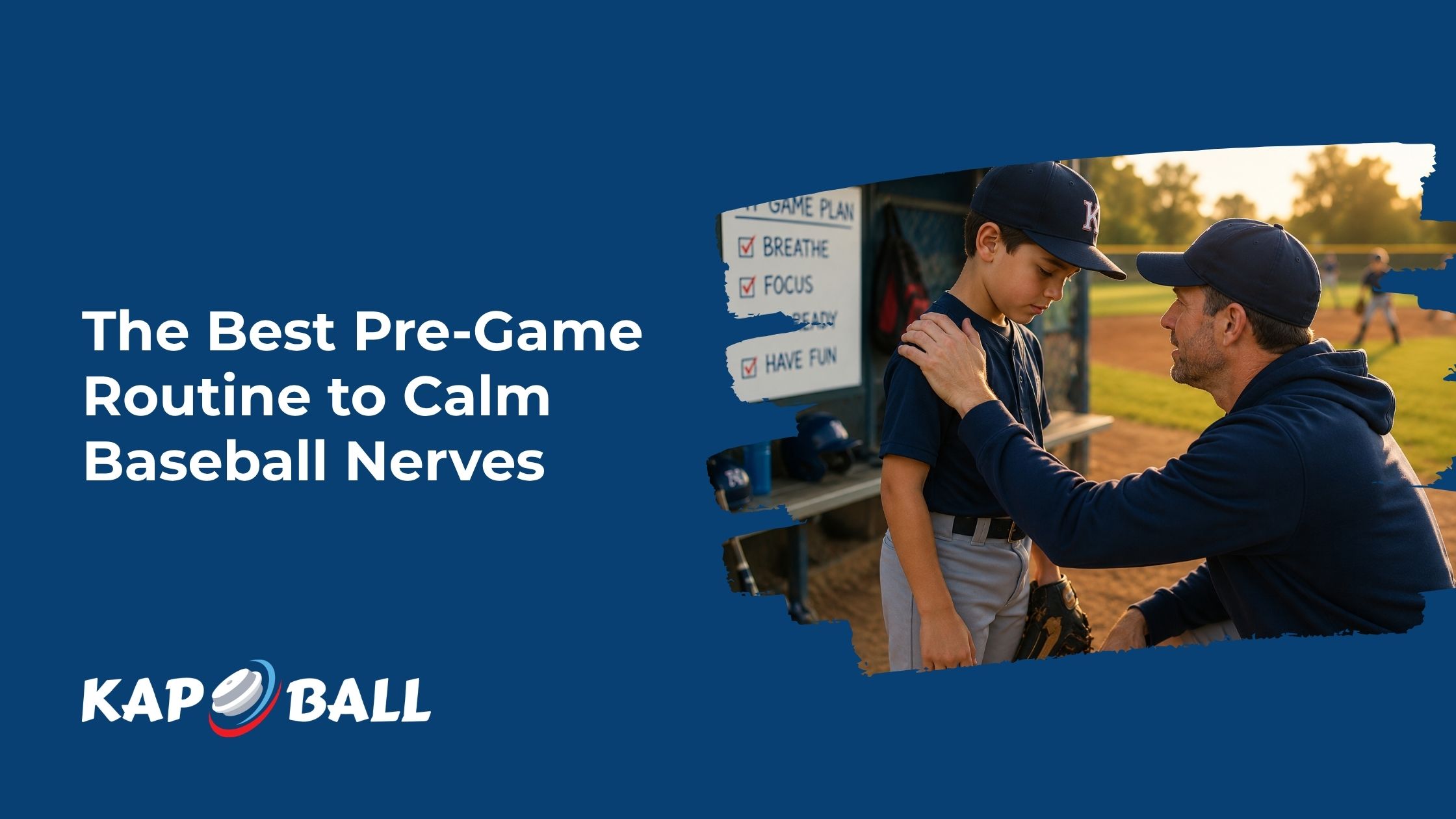
If your child gets nervous before baseball games, they are not alone.
I’ve coached plenty of young players who looked completely different on game day compared to practice. In practice, they laugh, play loose, and trust themselves. Then game time arrives, and suddenly they’re quiet, tense, and worried about making mistakes.
That happens at every level of baseball.
The important thing to understand is this:
Nerves are not the problem.
Most kids get nervous because they care. They want to do well. They want to help their team. They want to make parents and coaches proud.
The goal is not to eliminate nerves completely. The goal is to help young players feel calm, prepared, and in control before the first pitch.
That’s where a simple pre-game routine can make a huge difference.
Why Pre-Game Routines Matter
Young players thrive on familiarity.
When everything around them feels unpredictable, routines give them something steady to lean on. A good pre-game routine creates comfort, focus, and confidence because the player knows exactly what comes next.
Without a routine, kids often spend pre-game time:
Overthinking
Watching other players
Worrying about mistakes
Feeling rushed
Building anxiety
With a routine, they stay focused on preparation instead of pressure.
That shift matters more than most parents realize.
The Goal of a Pre-Game Routine
A lot of people think pre-game routines are about getting “hyped up.”
For young players, that’s usually the opposite of what they need.
Most kids don’t need more adrenaline. They need calm focus.
A strong routine helps players:
Slow their thoughts down
Feel physically ready
Focus on simple tasks
Build confidence through repetition
Relax before the game starts
The best routines are simple, repeatable, and low stress.
A Simple Pre-Game Routine for Young Players
Here’s a routine I recommend often for younger baseball players, especially beginners.
1. Arrive Early and Unrushed
This step alone changes everything.
When families arrive late, kids immediately feel tension. They rush to get dressed, hurry through warmups, and mentally start the game feeling behind.
Arriving 20–30 minutes early gives players time to settle in and breathe.
Calm starts before warmups even begin.
2. Start with Easy Catch
Before intense drills or hard throws, begin with simple catches at a comfortable distance.
Focus on:
Seeing the ball clearly
Soft hands
Smooth throws
Controlled breathing
This helps players relax physically and mentally.
One of the biggest confidence boosters in baseball is simply feeling the ball cleanly in the glove a few times before the game.
3. Add Controlled Movement
Next, move into light athletic movement:
Shuffle steps
Ready position work
Easy ground balls
Short throwing progressions
The goal is not exhaustion.
The goal is helping the body feel awake, loose, and ready.
Young players gain confidence when their bodies feel prepared.
4. Take Relaxed Practice Swings
Before games, some kids swing as hard as possible trying to “look ready.”
That usually creates tension.
Instead, encourage smooth, balanced swings with simple goals:
See the ball
Stay balanced
Finish strong
Confidence at the plate often comes from rhythm, not power.
5. Use One Simple Mental Cue
This is one of my favorite tools for nervous players.
Before the game starts, have your child focus on one short phrase:
“Just compete.”
“See the ball.”
“One play at a time.”
“Have fun.”
“Be ready.”
Not five thoughts. Not mechanical overload.
One simple cue.
Young players perform better when their minds feel clear.
What Parents Should Avoid Before Games
Parents mean well. Always.
But sometimes our pre-game conversations accidentally increase pressure.
Here are a few things I encourage parents to avoid right before games:
Long technical instructions
Talking about mistakes from last game
Comparing players
Focusing on results
Asking kids if they’re nervous repeatedly
Instead, keep communication calm and supportive.
Sometimes the best pre-game comment is simply:
“I love watching you play.”
That lowers pressure immediately.
Confidence Comes From Preparation
One of the biggest myths in youth sports is that confidence is purely emotional.
It’s not.
Confidence often comes from preparation.
When kids know:
They warmed up properly
Their body feels ready
Their routine stays consistent
They’ve handled these moments before
…they stop relying entirely on emotions to feel prepared.
That’s when nerves become manageable instead of overwhelming.
Final Thoughts
Every player gets nervous sometimes. Even experienced athletes.
What matters is helping young players develop tools that keep those nerves from controlling them.
A simple pre-game routine creates stability, calmness, and confidence. Over time, it teaches players something important:
“I know how to get myself ready.”
That lesson reaches far beyond baseball.
Next Step
Try building a simple pre-game routine with your player this week. Keep it short, consistent, and relaxed. You don’t need anything complicated. A few calm catches, some easy movement, and one positive mental cue can completely change how a young athlete feels before a game. The goal is not perfection. The goal is helping kids walk onto the field feeling prepared and confident.

