What Situational Awareness Means in Youth Baseball
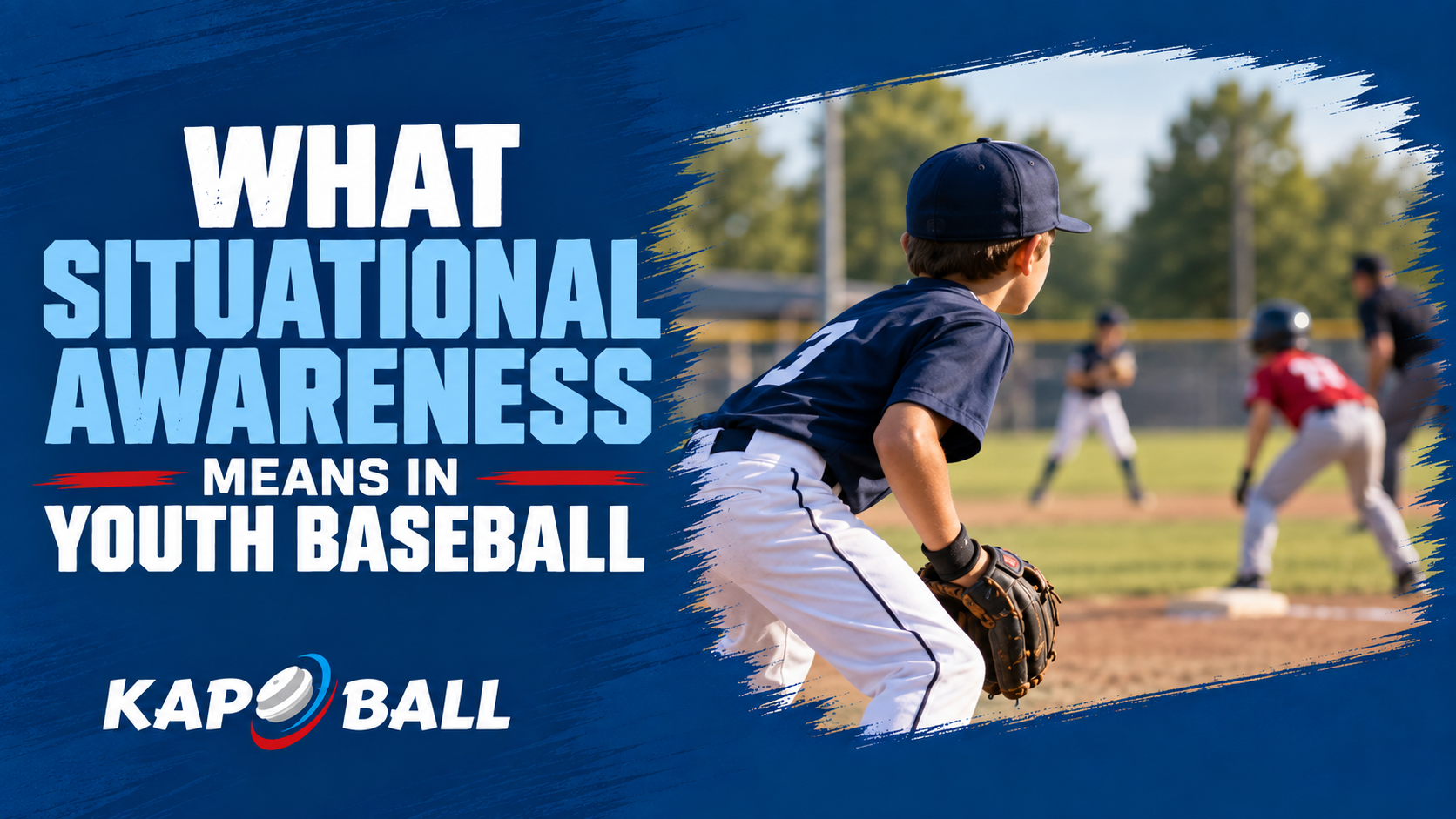
One of the biggest differences between a young player who is simply participating in the game and one who is really starting to understand baseball is situational awareness.
You may have seen it before.
The ball is hit to the outfield, and your young player is standing in the same spot they were standing before the pitch.
A runner is on second, but your player isn't thinking about where the next play might be.
There are two outs, but the player doesn't know what they should do if the ball comes to them.
Then the play happens, and they look around trying to figure out what just happened.
That's not necessarily a lack of effort.
Most of the time, it's a lack of experience.
So, what does situational awareness mean in youth baseball?
Simply put, it means knowing the situation before the ball is put in play and having an idea of what you're going to do if the ball comes to you.
That's a skill we can teach.
Baseball Is A Thinking Game
It's easy to look at baseball as a game of throwing, hitting, and catching.
Those skills are important.
But baseball is also a game of decisions.
Every pitch creates a new situation.
Where are the runners?
How many outs are there?
What is the score?
Where should I be positioned?
Where is the force play?
What happens if the ball is hit to me?
Where should I throw it?
Young players don't automatically know all of this.
They have to learn it.
And that's where situational awareness comes in.
What Should A Player Know Before Every Pitch?
I like giving young players a simple checklist.
Before the pitcher starts their delivery, the player should know:
How many outs are there?
Where are the runners?
Where is my next play?
Where should I be positioned?
What am I going to do if the ball comes to me?
That's a lot for a young player to remember at first.
So don't expect them to master everything immediately.
Start with one question.
"Where's my play?"
Once they understand that, start adding more.
Example: Runner On First
Let's say there's a runner on first base with nobody out.
Your young infielder needs to understand that the situation is different than having nobody on base.
There may be a force at second.
Depending on the position and play, they may need to think about turning a double play.
If the ball is hit directly to them, they shouldn't have to start thinking for the first time after they field it.
They should already have an idea of what they're looking for.
That's situational awareness.
The goal isn't to make them robotic.
The goal is to help them think before the play happens.
Example: Two Outs
Two outs changes the situation.
If a ball is hit into the outfield, runners may be going aggressively.
If there's a force play, the defensive priorities can change.
A young player who knows there are two outs has more information available to them.
That's why I want players to get into the habit of checking the situation before every pitch.
Don't wait for the ball to tell you what to do.
Think first.
The "What If?" Game
One of my favorite ways to teach situational awareness doesn't even require a ball.
Ask your player questions.
"What if there's a runner on first?"
"What if there are two outs?"
"What if the ball is hit to you?"
"What if the runner takes off?"
"What if the ball gets past the outfielder?"
"What if there's a runner on third?"
Let them think through the answer.
They don't have to get every answer right.
That's the point of practice.
You're giving their brain opportunities to rehearse the game before the game happens.
Don't Give Them Every Answer
This is where parents and coaches can sometimes do too much.
If we constantly yell the answer before our players have a chance to think, they can become dependent on us.
Instead of:
"Throw it to second!"
Try:
"Where's your play?"
Instead of telling them exactly what to do, ask questions that make them think.
"What are you looking for?"
"How many outs?"
"Where's the force?"
"What happens if the ball goes there?"
We want the player eventually asking themselves those questions without us.
That's when awareness starts becoming instinctive.
Situational Awareness Starts Before The Ball Is Hit
A common mistake is thinking baseball awareness only matters once the ball is hit.
It starts before that.
A good defensive player is already thinking.
They know the number of outs.
They know where the runners are.
They know the score.
They know where they need to be.
They know their responsibilities.
Then the pitch happens.
Now they aren't starting from zero.
They already have a plan.
Teach Players To Reset After Every Pitch
Baseball moves quickly.
A player can make a great play and then immediately have another responsibility.
Or they can make an error and still need to be ready for the next pitch.
That's why I like teaching a simple reset routine.
After every play:
Know the outs.
Find the runners.
Know your responsibility.
Get ready.
Then repeat.
This creates a consistent habit.
Awareness Helps Players Play Faster
You may notice something interesting as your child develops situational awareness.
They start to look faster.
Not necessarily because they're physically faster.
They're thinking faster.
A player who already knows where the play is going can react immediately.
A player who waits until the ball reaches them to figure out what to do will naturally be slower.
That's why baseball IQ can make such a difference.
The best reaction is often the one you prepared for before the ball was hit.
Make It Age Appropriate
We don't need to overload a six-year-old with complicated baseball strategy.
Young players need simple concepts.
Start with:
How many outs?
Where are the runners?
Where should I be?
Where's my play?
As they get older, you can introduce more advanced situations.
Baseball is complicated.
Let their understanding grow with them.
Situational Awareness Is A Skill
Some players seem naturally aware of what's happening on the field.
Others aren't.
That doesn't mean one player has baseball intelligence and the other doesn't.
Awareness can be developed.
Talk about situations.
Ask questions.
Use practice time to create game scenarios.
Let players make decisions.
Let them make mistakes.
Then explain what they could have seen differently.
Every one of those experiences adds another piece to their baseball understanding.
Parents Can Help Without Becoming The Coach
You don't have to turn every car ride home into a baseball lecture.
Keep it fun.
After a game, you might ask:
"What were you thinking when that runner was on first?"
Or:
"If that ball had been hit to you, where would you have thrown it?"
Let your child explain.
If they get it wrong, don't immediately jump in.
Ask another question.
Help them work through it.
You're teaching them how to think instead of simply giving them the answer.
The Goal Is A Player Who Thinks For Himself
Ultimately, that's what we're after.
I don't want a player who only knows what to do when a coach is yelling instructions from the dugout.
I want a player who looks around and understands the situation.
They know the outs.
They know the runners.
They know their responsibility.
They anticipate.
They communicate.
They make a decision.
That's a confident baseball player.
And the more we teach young athletes to think about the game, the more prepared they'll become to handle situations on their own.
Next Step
The next time you're watching your child play, pick one situation and focus on it. Before each pitch, quietly ask your player, "What's the situation?" Let them tell you the number of outs, where the runners are, and what their play would be. Don't worry about getting everything perfect. You're building awareness one situation at a time. As they improve, add another question. Eventually, you want your player looking around the field and answering those questions automatically. That's when situational awareness starts becoming part of how they play.

