Top 3 Fielding Drills for Beginners
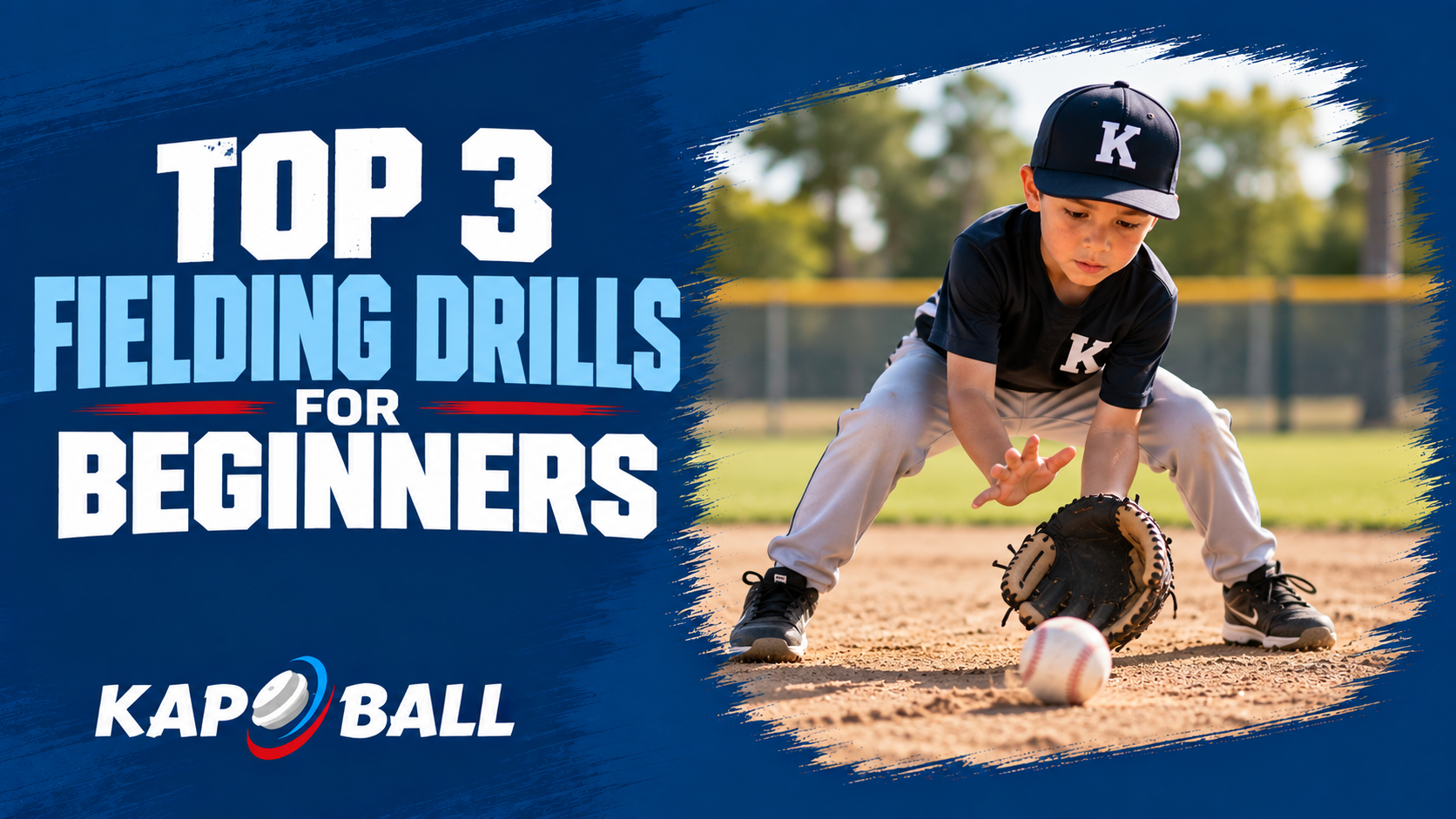
What are the top fielding drills for beginners?
If your child is just starting baseball, fielding can feel like one of the hardest parts of the game.
The ball is coming toward them.
They have to get their glove in the right position.
They have to move their feet.
Then they have to catch the ball and make a throw.
That's a lot to think about for a young player.
The good news is that beginners don't need complicated drills. In fact, I believe simple drills done correctly are often the best way to build confidence.
Here are my top 3 fielding drills for beginners.
1. The Ready Position Drill
Before we worry about catching the ball, we need to teach kids how to get ready for it.
Have your player start in an athletic position:
Feet about shoulder-width apart
Knees slightly bent
Weight on the balls of the feet
Glove out in front
Chest up
Eyes forward
Then have them practice getting into that position quickly.
You can say, "Ready!"
They get into position.
Then say, "Relax."
Repeat it several times.
Once they understand the position, add a ball.
Roll a ball slowly toward them and let them focus on getting their body behind it.
Why I like this drill
Young players sometimes stand straight up while waiting for the ball.
That's a tough position to field from.
The ready position teaches them to stay active and prepared.
It also gives them something they can control.
Before the ball is even hit, their body is ready to move.
That's a great habit to build early.
2. The Slow Roller Drill
This is one of my favorite beginner fielding drills.
And you don't need a baseball field to do it.
Find a safe, open area with a reasonably smooth surface.
Have your player start in their ready position.
Then gently roll the ball toward them.
Their job is simple:
Get in front of the ball. Field it with two hands. Bring it to the middle of the body.
Don't rush the drill.
We're not trying to see how fast they can field the ball.
We're teaching them how to make a clean play.
As they improve, you can roll the ball slightly to their left or right.
Now they have to move their feet before getting their glove to the ball.
One coaching point I always emphasize
Move your feet.
I see young players reach for balls with their gloves instead of moving their bodies.
That creates difficult fielding positions.
Teach them to get their body behind the baseball whenever possible.
The glove catches the ball.
The feet get the body into position.
Both are important.
3. Field, Funnel, Throw
Once your player is comfortable fielding a slow roller, it's time to connect the pieces.
This drill has three parts:
Field. Funnel. Throw.
Roll the ball toward your player.
They field it with the glove.
They bring the ball toward their throwing hand.
Then they make a controlled throw to a target.
Start close.
You don't need to have them throw 60 feet just because that's the distance between bases.
The goal is good movement, not maximum distance.
Have them focus on:
Getting their body behind the ball.
Fielding it cleanly.
Bringing the ball to the throwing hand.
Getting the feet organized.
Throwing toward the target.
Once those movements become comfortable, you can gradually increase the distance.
Why this drill matters
Fielding isn't just about catching.
Eventually, your player needs to turn a ground ball into an out.
That means fielding and throwing have to work together.
This drill starts teaching that connection without overwhelming the player.
Don't Make Beginner Fielding Too Complicated
One mistake I see parents and coaches make is trying to teach everything at once.
"Get lower."
"Use two hands."
"Move your feet."
"Get your glove down."
"Throw over the top."
"Step toward your target."
That's a lot for a young player to process.
Instead, pick one thing to focus on.
Maybe today's focus is getting their body behind the ball.
Tomorrow, you can work on the transfer.
Then you can add the throw.
Build the skill one piece at a time.
That's how confidence develops.
How Many Reps Should Beginners Get?
I'd rather see a young player get 20 good repetitions than 100 rushed ones.
Start with short sessions.
Ten to fifteen minutes of focused fielding can be plenty for a beginner.
You can also turn the drills into a game.
How many clean fielding reps can they get?
Can they beat their score from yesterday?
Can they field five in a row without making a mistake?
Keep it fun.
Kids don't need every practice to feel like a lesson.
They need opportunities to move, compete, learn, and try again.
What If They Miss the Ball?
They will.
That's baseball.
Your child is going to miss ground balls.
They're going to bobble the ball.
They're going to make a bad throw.
That's not a reason to stop the drill.
It's a reason to give them another repetition.
Instead of immediately saying, "You need to get your glove down," ask them what happened.
"Where do you think you could have gotten your body?"
"Did you move your feet?"
"What would you try next time?"
You're helping them learn to solve the problem.
That's a much bigger skill than simply memorizing instructions.
The Goal Is Confidence
For a beginner, the goal isn't to turn them into a Gold Glove defender overnight.
The goal is to help them feel comfortable with the baseball.
We want them to see a ground ball and think:
I can make this play.
That confidence comes from repetition.
It comes from simple instruction.
And it comes from allowing kids to make mistakes without making those mistakes feel bigger than they are.
Start with the ready position.
Then slow rollers.
Then field, funnel, and throw.
Keep it simple.
Keep it consistent.
And let your young player have fun.
Next Step
Take 10 minutes this week and try these three drills with your player. Don't worry about doing everything perfectly. Start with slow, easy repetitions and celebrate the small improvements. If your child fields five balls cleanly today, that's progress. Come back tomorrow and try for six. Small wins add up, and that's how young players build real confidence.

