Why Every Player Needs a Reset Routine Between At-Bats
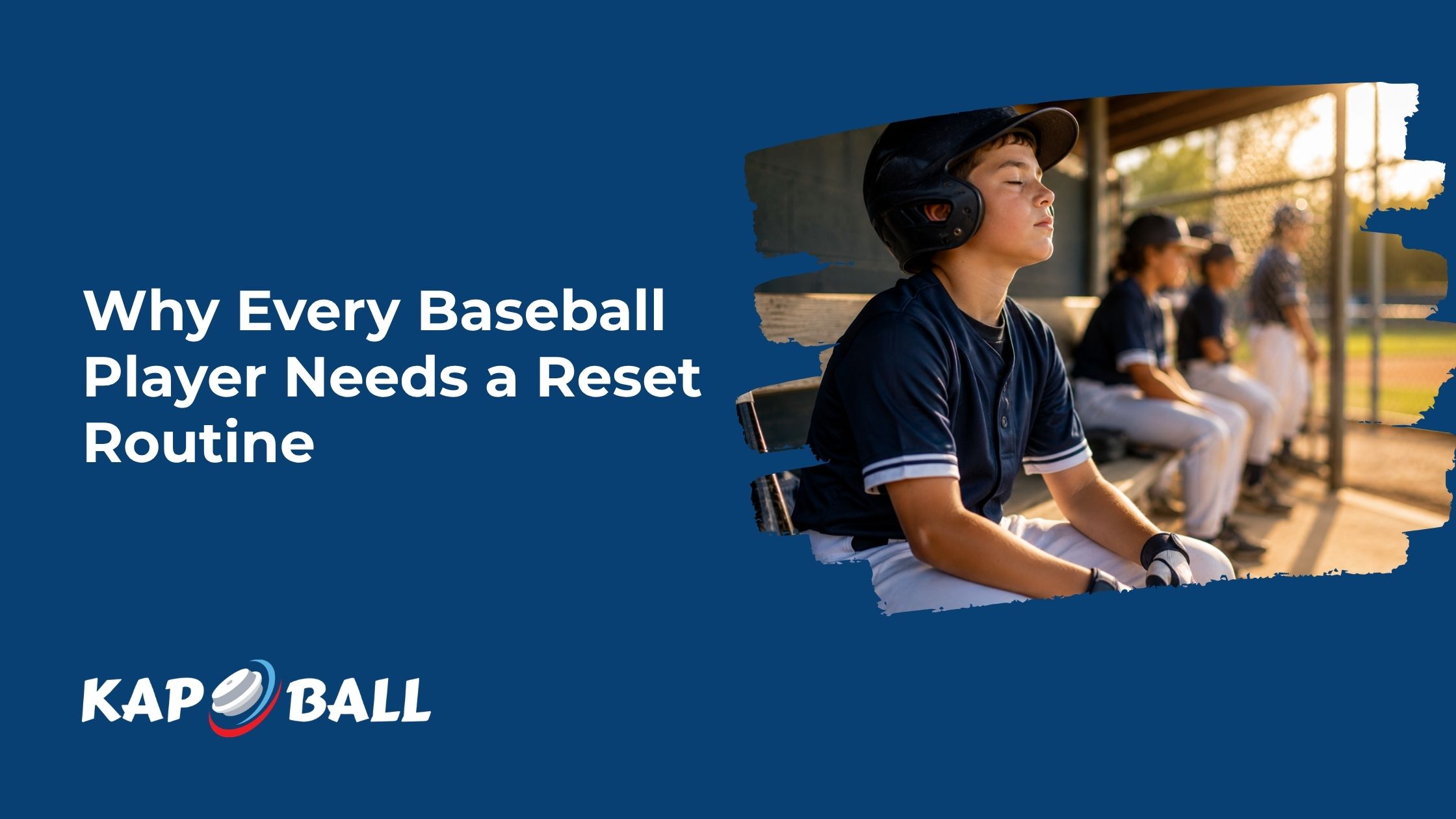
What's a Good Reset Routine Between At-Bats?
One of the hardest lessons for young baseball players to learn is that every at-bat is a new opportunity.
The problem?
Most players don't treat it that way.
They carry their last at-bat with them.
A strikeout follows them into the field.
A weak ground ball stays in their head for two innings.
Even a great hit can create pressure to repeat the same result next time.
I've seen talented players let one bad at-bat ruin an entire game simply because they never mentally reset.
That's why every player needs a reset routine.
A simple process that helps them move on from the last at-bat and focus on the next one.
Why Resetting Matters
Baseball is different from many sports.
In basketball, you might get another shot in a few seconds.
In soccer, you're constantly involved in the action.
In baseball, there can be a long wait between opportunities.
That leaves plenty of time for players to replay mistakes in their minds.
Young athletes often think:
"I can't strike out again."
"I should have swung at that pitch."
"I let my team down."
The longer those thoughts stay around, the harder it becomes to stay focused.
A reset routine helps players let go of what already happened and return their attention to what they can control right now.
The Truth About Baseball
One of the first mindset lessons I teach players is this:
Even the best hitters fail a lot.
A player who gets a hit three times out of ten is considered successful.
Think about that.
Failure is built into the game.
When players understand this, they stop treating every out as a disaster.
Instead, they start viewing each at-bat as part of a much bigger process.
That's where a reset routine becomes powerful.
A Simple Three-Step Reset Routine
Young players don't need complicated mental training.
They need something simple they can remember during a game.
Here's the routine I recommend.
Step 1: Acknowledge What Happened
After the at-bat, briefly recognize the result.
Maybe it was:
A strikeout
A walk
A hard-hit line drive
A weak ground ball
Don't ignore it.
Don't obsess over it.
Simply acknowledge it.
A quick thought like:
"I was late on that fastball."
Or:
"Good swing, bad luck."
Then move on.
Step 2: Take a Deep Breath
This sounds simple because it is.
One slow, deep breath helps calm the body and clear the mind.
Breathing creates a physical reset.
It signals that the previous at-bat is over.
The next opportunity hasn't happened yet.
Players often perform better when they're relaxed rather than tense.
Step 3: Focus on One Simple Cue
Choose one thought for the next at-bat.
Examples include:
See the ball
Stay balanced
Swing hard
Be aggressive
Have fun
The key is choosing one cue, not ten.
When players overload their minds with instructions, they often become hesitant.
Simple thoughts usually produce better results.
What About Good At-Bats?
This surprises many parents.
Players should reset after good at-bats too.
Why?
Because success can create pressure.
A player gets a double and starts thinking:
"I need another hit."
Now they're focused on results again.
The best players enjoy the success, then reset and prepare for the next opportunity.
Every at-bat starts at zero.
How Parents Can Help
One of the most valuable things parents can do after games is avoid turning every at-bat into a detailed review session.
Instead of asking:
"Why did you strike out?"
Or:
"Why didn't you swing?"
Try asking:
"How did you respond after that at-bat?"
"What was your focus for the next one?"
"Did you stick to your routine?"
These questions reinforce mental skills rather than outcomes.
Over time, that helps players become more resilient.
The Bigger Lesson
Learning how to reset isn't just a baseball skill.
It's a life skill.
Everyone makes mistakes.
Everyone has bad days.
The ability to learn from an experience, let it go, and move forward is something successful people do in every area of life.
Baseball gives kids a chance to practice that skill over and over again.
One pitch.
One at-bat.
One game at a time.
Next Step
Talk with your player this week about creating their own reset routine. Keep it simple. Maybe it's one deep breath, one positive cue, and one reminder that the last at-bat is over. Practice it during games and even during backyard training sessions. The goal isn't to eliminate mistakes. The goal is to recover from them faster. That's a skill that can help your player both on and off the field.

