Why the Outfield Is Not a Demotion for Your Child
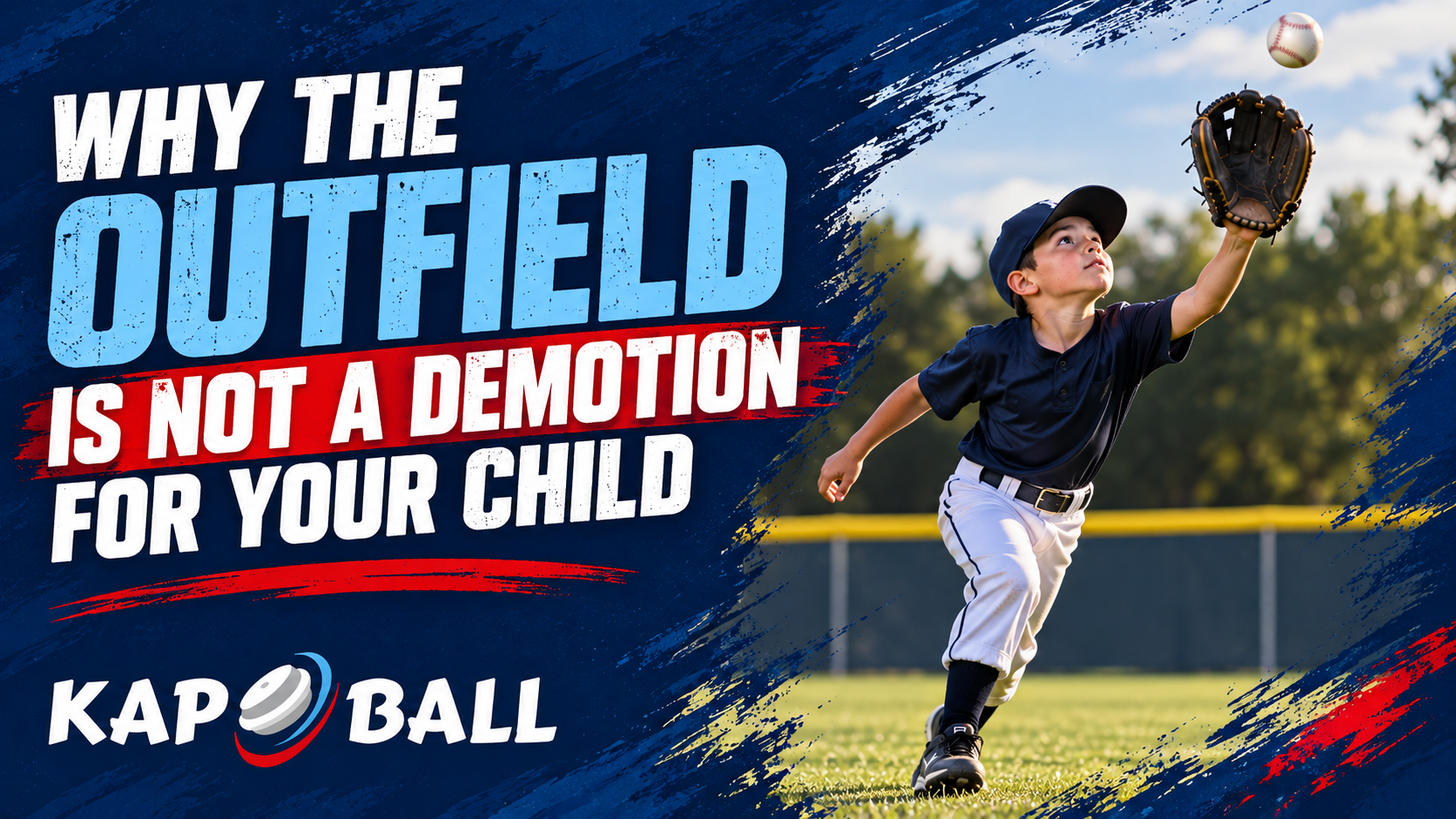
"They moved my kid to the outfield."
And the way some parents say it, you would think their child had been sent to the bench.
I understand where that feeling comes from.
In youth baseball, the infield can sometimes get treated like the "important" part of the field. Shortstop sounds important. Third base sounds important. Pitcher sounds important.
The outfield?
Some families see it as where you put the kid who isn't quite ready for the infield.
I want to change that mindset.
Playing the outfield is not a demotion.
It is an opportunity.
And for a young player, it can develop skills that will make them a better baseball player at every position.
Some of the Most Exciting Players in Baseball Play the Outfield
If your child thinks playing the outfield means they're somehow less important, show them Major League Baseball.
Some of the most dynamic, exciting, and talented players in the game are outfielders.
Look at Fernando Tatis Jr.
Tatis came up as a shortstop with the Padres. But when San Diego moved him to the outfield, he didn't become less valuable. He became one of the best defensive right fielders in baseball. He has won two Platinum Glove Awards as an outfielder, and MLB has described him as perhaps the best right fielder in the game.
And watch him play.
The speed.
The arm.
The range.
The athleticism.
The energy.
There is nothing about Tatis playing right field that looks like a demotion.
Then look at Ronald Acuña Jr.
Acuña is another incredible example of what an elite outfielder can look like. He brings power, speed, athleticism, and an incredible arm to the position. MLB currently lists him as a right fielder, and he has continued to make spectacular defensive plays there.
Acuña's ability to impact the game is exactly what we should want young players to understand about the outfield.
He can change a game with his bat.
He can change a game with his legs.
He can change a game with his glove.
And he can change a game with his arm.
That's not a lesser position.
That's a playmaker's position.
And Tatis and Acuña aren't exceptions.
MLB's 2026 position rankings put Aaron Judge, Juan Soto, Kyle Tucker, Corbin Carroll, Ronald Acuña Jr., and Fernando Tatis Jr. among its top right fielders. That's an incredible collection of superstar talent at one position.
So when your child says, "I don't want to play the outfield," I want you to help them see it differently.
Don't say, "It's okay, maybe they'll move you back to the infield."
Say:
"Let's see how good you can become out there."
Because the outfield isn't where you send players who aren't good enough.
It's where you find players who can run, track, react, throw, communicate, and make plays.
And some of the best athletes in the world do exactly that.
The Bigger Lesson for Young Players
Your child's position today does not define the player they will become.
Tatis is a perfect example.
He began his Major League career as a shortstop, became an elite right fielder, and has even shown the ability to move around the diamond when his team needs him. MLB recently described him as an elite athlete who can handle different positions.
That's what I want for young players.
Don't become a shortstop. Become a baseball player.
Don't become an outfielder.
Become an athlete who can play baseball.
Learn the whole game.
Learn how to read the ball.
Learn how to move.
Learn how to communicate.
Learn where to be.
Learn how to make the next play.
The position can change.
The skills stay with you.
And if your child ends up becoming the next great center fielder or right fielder, they'll have no reason to apologize for it.
They should be proud of it.
The outfield isn't a demotion. It's a position filled with some of the biggest stars, best athletes, and most exciting players in baseball.
The Outfield Is a Big Responsibility
Think about what an outfielder has to do.
The ball is hit, and they have to figure out where it's going.
Is it going over their head?
Is it dropping in front of them?
Do they need to move left or right?
How hard was the ball hit?
How quickly do they need to get there?
And once they catch it, where is the next play?
That's a lot of information to process.
A good outfielder isn't standing around waiting for something to happen.
They're reading the game.
They're anticipating.
They're communicating.
They're moving.
They're making decisions.
That's baseball.
The Outfield Teaches Kids to Track the Ball
One of the most important skills a young baseball player can develop is the ability to track the ball.
The outfield gives them plenty of opportunities to do that.
A fly ball doesn't always travel exactly where you expect.
Young players have to learn to read the ball off the bat and adjust their route.
That's a skill that takes repetition.
And it doesn't happen overnight.
The more fly balls a player tracks, the better they become at judging:
Direction
Speed
Height
Distance
Spin
Where the ball is going to land
Those skills are valuable whether your child eventually plays center field, shortstop, second base, or somewhere else.
The Outfield Develops Athleticism
Another reason I love having young players spend time in the outfield is the movement.
Outfielders have to run.
Sometimes forward.
Sometimes backward.
Sometimes sideways.
Sometimes they have to change direction quickly.
They have to get comfortable moving while keeping their eyes on the ball.
That's not easy.
It develops coordination, balance, body control, and awareness.
And here's the important part.
Your child doesn't have to be the fastest player on the team to become a good outfielder.
They can learn how to take better routes.
They can learn how to get a good first step.
They can learn how to anticipate.
They can learn how to position themselves.
Good outfield play isn't just about speed.
It's about reading the game.
Center Field Is Not a Place to Hide
If your child is playing center field, they are often in one of the most important defensive positions on the field.
The center fielder has to cover a tremendous amount of ground.
They also have to communicate with the other outfielders.
On some teams, the center fielder becomes the leader of the outfield.
That means your child has to learn to communicate.
"Mine!"
"Go!"
"Cut!"
"Back!"
Those aren't just baseball words.
They're decision-making skills.
Your child is learning how to take responsibility when the ball is in the air.
That's valuable.
Outfielders Have to Think Ahead
Here's another part of outfield play that I love.
The best outfielders don't wait until the ball is hit to start thinking.
They think before the pitch.
How many outs are there?
Are there runners on base?
What's the score?
Where are the runners?
Where should I throw if the ball comes to me?
What happens if the ball gets hit over my head?
That's situational awareness.
And it's one of the things I want every young baseball player to develop.
You can play the outfield and learn to think several steps ahead.
That's a skill that follows you everywhere on the baseball field.
The Outfield Can Build Confidence
Sometimes a young player gets frustrated because they aren't playing the position they wanted.
Maybe they wanted shortstop.
Maybe they wanted to pitch.
Now they're in right field.
Instead of allowing your child to think, I'm out there because I'm not good enough, help them change the story.
Try this:
"This is your opportunity to become really good at something."
Then give them a goal.
Catch five fly balls.
Improve their first step.
Make a strong throw to the cutoff.
Learn where to be on every situation.
Communicate with your teammates.
Now the outfield becomes a challenge.
And challenges create confidence when kids learn that they can improve.
Don't Let Your Child Become a Spectator
There is one thing I don't want to see from a young outfielder.
Standing out there and watching the game.
If your child is in the outfield, they should be involved in every pitch.
They should know the situation.
They should know where they're going if the ball comes to them.
They should be moving with the pitch.
They should be backing up throws when appropriate.
They should be communicating.
They should be paying attention to the hitter and runners.
There is always something to do.
That's what makes the outfield such a great teaching position.
Every Position Teaches Something Different
I don't want young players to become obsessed with one position too early.
At the beginner level, I want kids learning baseball.
That means playing different positions.
The infield teaches quick reactions and short movements.
The outfield teaches tracking, routes, communication, and reading the ball.
Catching teaches receiving and blocking.
Pitching teaches control and composure.
Every position gives a player a different piece of the game.
The more pieces they understand, the better overall player they can become.
Parents, Don't Call It a Demotion
This is probably the biggest thing I want parents to take away from this article.
Your child is listening to you.
If you say, "Why did they put you in the outfield?" your child may hear:
"The outfield isn't important."
If you say, "Let's see how good you can become out there," they hear something completely different.
They hear an opportunity.
So when your child comes home disappointed about playing the outfield, don't reinforce the stigma.
Ask questions.
"How many fly balls did you get?"
"Did you get a good first step?"
"Did you know where to throw before the pitch?"
"Did you communicate with your teammates?"
"What's one thing you want to get better at next game?"
Now you're helping them focus on development instead of status.
The Outfield Is Part of the Game
I want young players to understand something simple:
There are no unimportant positions in baseball.
Every position matters.
Every player has a job.
Every player has an opportunity to contribute.
So if your child gets moved to the outfield, don't look at it as a step backward.
Look at it as another classroom.
Another opportunity to develop.
Another chance to learn how to read the ball, move better, communicate, think ahead, and become a more complete baseball player.
And who knows?
Your child may end up loving it.
They may become the player everyone wants in center field.
But even if they eventually move back to the infield, the skills they learned in the outfield will come with them.
The outfield isn't a demotion. It's development.
Next Step
The next time your child plays the outfield, watch the game from their perspective. Don't just watch whether they catch the ball. Watch how they prepare before the pitch, how they move when the ball is hit, how they communicate, and whether they know where the next play is. Then ask them about one thing they did well and one thing they want to improve. Help them see the outfield as an opportunity, not a punishment.

