Vision Training for Better Contact in Baseball
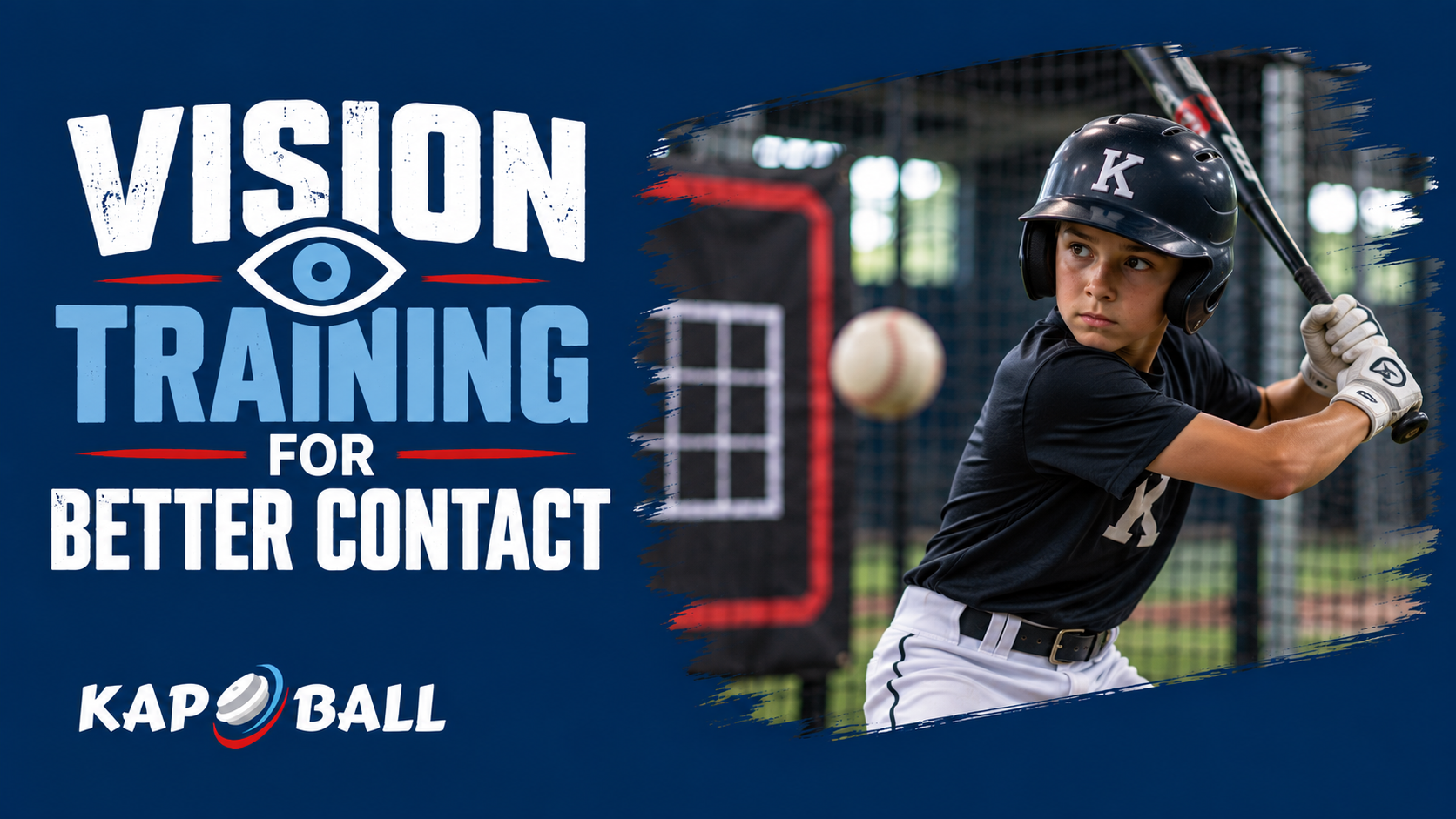
When a young hitter struggles at the plate, the first thing many parents and coaches look at is the swing.
Are they loading correctly?
Are they keeping their hands inside the ball?
Are they finishing their swing?
Those things matter.
But there's another piece of hitting that sometimes gets overlooked.
What is the hitter actually seeing?
Hitting a baseball requires much more than having a good swing. A young player has to track the ball, recognize its movement, judge its speed, and make a decision in a fraction of a second.
That's why vision training can be a valuable part of developing better contact.
So, what's the best vision training for better contact?
The answer isn't necessarily an expensive gadget or complicated training system. Some of the most useful exercises are simple drills that teach young hitters to watch the ball better and improve their ability to recognize what is coming.
Seeing the Ball Is Only the Beginning
When we tell a young hitter to "keep your eye on the ball," we're giving them good advice.
But hitting requires more than simply seeing the baseball.
The hitter needs to track the ball from the pitcher's hand toward the plate.
They need to recognize the pitch.
They need to judge where the ball is going.
Then they need to decide whether to swing.
And finally, they need to get the bat to the right place at the right time.
That's a lot happening very quickly.
Good vision habits can help a player get more information from each pitch.
1. Ball Tracking Drill
This is one of the simplest places to start.
Have your young player stand in their normal hitting stance while a partner tosses a baseball softly from a short distance.
The hitter doesn't swing.
Their only job is to track the ball all the way into the glove.
You can vary the location slightly.
Inside.
Outside.
Up.
Down.
The player should keep their eyes on the ball and call out where they saw it.
For example:
"Inside."
"Low."
"High."
This helps teach the player to actively track the baseball instead of simply waiting for it to arrive.
Keep the drill short.
A few minutes of focused tracking is plenty.
2. Colored Ball Drill
This is a fun way to challenge a hitter's visual recognition.
Use different colored training balls if you have them available.
Have your partner toss one of the balls toward the hitter.
Before the ball reaches the plate, the hitter has to call out the color.
You can make it more challenging as they improve.
The goal isn't to make the player swing.
The goal is to make them recognize information while the ball is moving toward them.
This can help young players become more engaged with the ball during the pitch.
3. Numbered Ball Drill
Don't have colored balls?
No problem.
Use a marker to put large numbers on a few baseballs.
Have your partner toss the balls toward the hitter.
The hitter calls out the number they see.
You can start with easy tosses and gradually increase the difficulty.
Again, we're not focused on hitting.
We're training the player to pay attention to the ball from the moment it is released.
This is especially useful because young hitters sometimes lose focus once the ball leaves the pitcher's hand.
4. Front Toss With A "Take"
Now let's bring the swing back into the picture.
During front toss, don't have the player swing at every ball.
Mix in balls they should take.
The hitter has to track the pitch, recognize its location, and decide whether to swing.
This adds a decision-making component.
For example, you might establish a simple rule:
"Swing at strikes. Take balls."
The goal isn't to create a perfect strike-zone judgment exercise.
It's to teach the player that hitting isn't simply about swinging the bat.
Seeing and deciding are part of hitting.
5. Soft Toss With Different Locations
Soft toss can also become a vision and recognition drill.
Instead of tossing every ball to the same spot, vary the location.
Give the hitter inside pitches.
Then outside pitches.
Then higher pitches.
Then lower pitches.
Don't make the movement extreme.
The goal is simply to encourage the hitter to track the ball and adjust their decision based on where it is going.
You can even ask afterward:
"Where did you see that pitch?"
That question encourages awareness.
Don't Turn Vision Training Into A Competition
This is especially important with young players.
Vision training should be focused and fun.
It doesn't need to become:
"How many did you get right?"
"How many did you miss?"
"You're not seeing the ball today."
That can create unnecessary pressure.
Instead, celebrate good tracking.
"Great job staying with that ball."
"I liked how you picked that pitch up early."
"Good job recognizing that one was outside."
We're trying to build better habits.
Vision And Swing Mechanics Work Together
Vision training isn't a replacement for good hitting mechanics.
A player still needs a strong athletic stance, proper movement, balance, timing, and a repeatable swing.
But even a technically sound swing won't help much if the hitter isn't tracking the pitch well.
Think about it this way.
The eyes give the brain information. The body uses that information to make a decision. The swing responds to that decision.
That's why hitting development should include more than just taking swings.
Don't Expect A Magic Vision Drill
Parents sometimes ask me about the one drill that will instantly improve a player's vision.
I don't think there is one.
Good vision habits develop through consistent practice.
Track the ball.
Recognize the pitch.
Make decisions.
Repeat.
Over time, those habits can become more natural.
And remember, young players are still developing. Their ability to track and react will continue to change as they grow and gain experience.
Keep The Drill Appropriate For Your Player
Younger players don't need advanced vision training.
Start simple.
Short tosses.
Large targets.
Clear instructions.
Then gradually increase the challenge.
As players get older and more experienced, you can make the drills more difficult by increasing speed, changing locations, adding decision-making, or incorporating more realistic game situations.
The progression matters.
Don't make a beginner's drill unnecessarily complicated.
The Goal Is Better Information
At the end of the day, vision training isn't about making a young player stare harder at the baseball.
It's about helping them see better information.
Where is the pitch?
How is it moving?
Is it a pitch I want to attack?
Where is it likely to cross the plate?
Those are the questions happening in a hitter's mind.
The better a player becomes at gathering that information, the better prepared they are to make a good decision.
And good decisions lead to better swings.
Next Step
The next time your young player practices hitting, spend just five minutes on vision before you start taking full swings. Try the ball-tracking drill or the numbered-ball drill. Keep it simple and make it fun. Ask your player what they saw rather than immediately telling them what they did wrong. The goal is to help them become more aware of the baseball and more confident in what they're seeing. Give it time, stay patient, and let those small improvements build.

